


 English
 русский
 Deutsch

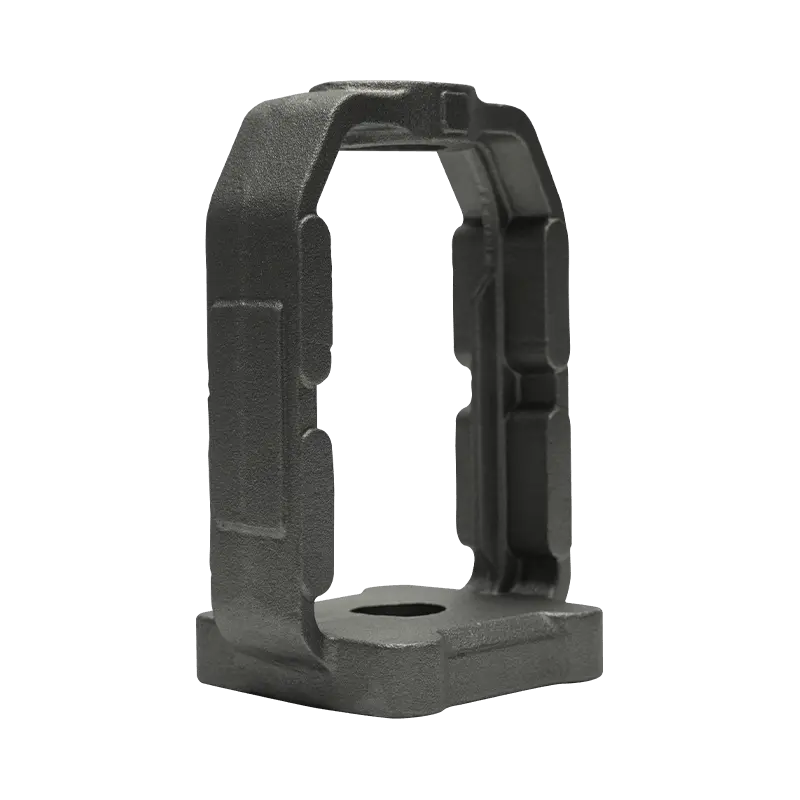
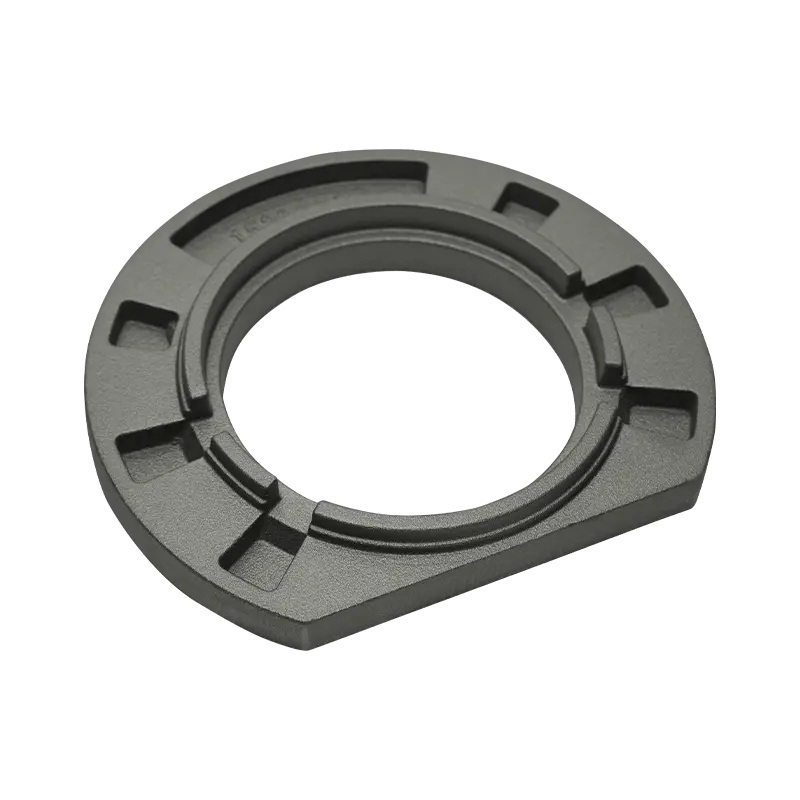
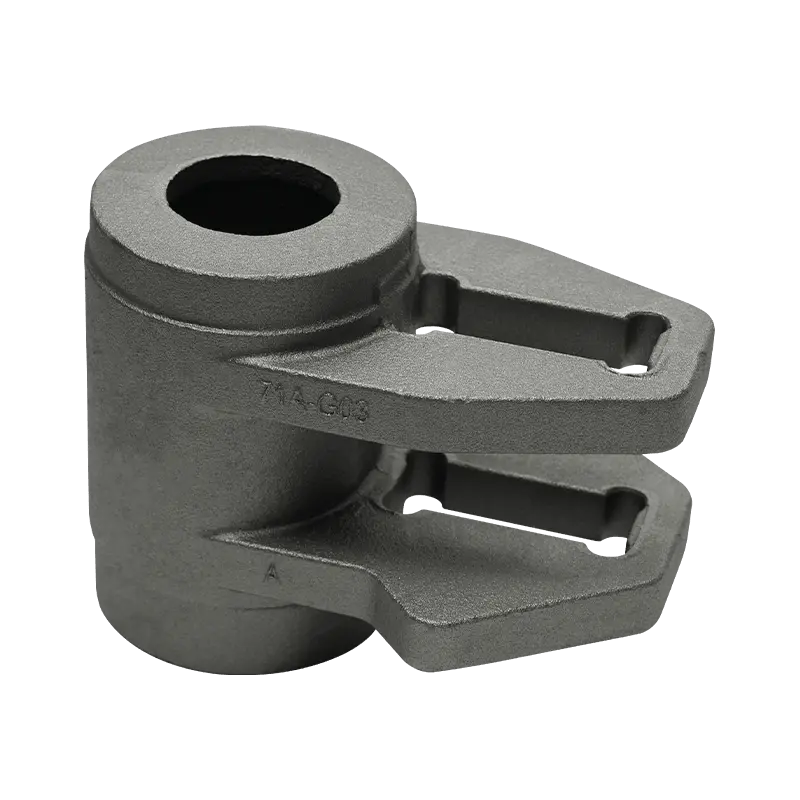
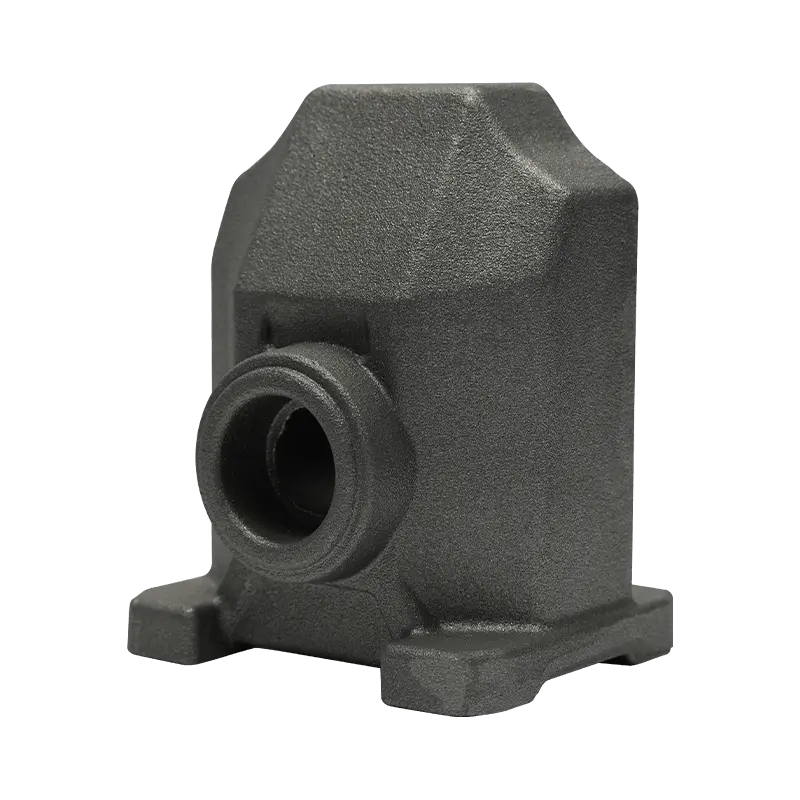
Ductile Cast Iron Industrial Robot Accessories Foundry
Ductile Cast Iron is an good industrial material and is widely used in the manufacture of industrial robot accessories. It has good mechanical properties and wear resistance, and is suitable for the manufacture of parts that require high strength and durability. Due to its high strength and high toughness, ductile iron performs outstandingly in the field of industrial robots. It can withstand heavy loads and vibrations in complex working environments, ensuring long-term stable operation of the equipment. Due to its good processing performance, industrial robot accessories made of ductile iron can accurately manufacture parts with complex shapes and precise dimensions, meeting the needs of modern automated production for high precision and high reliability.
ABOUT US
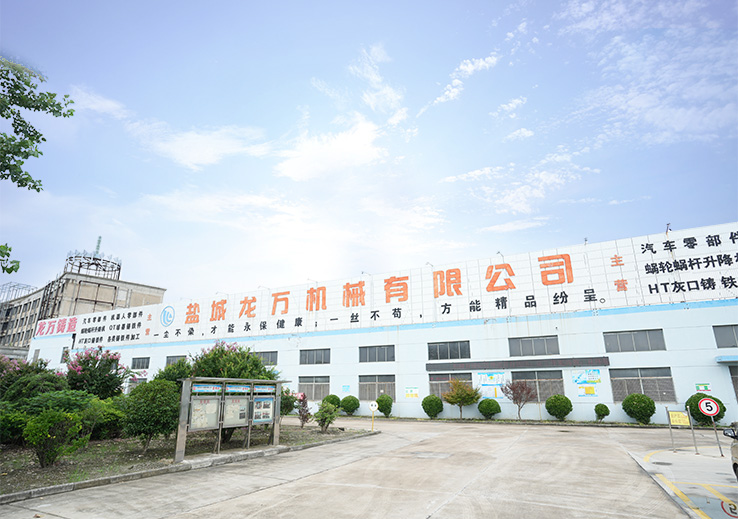
Yancheng Longwan Machinery Co., Ltd.
Founded in 2006, which located next to National Highway 204 in Yancheng City, Jiangsu Province, 40km from the center of Yancheng City, 5km from the center of Dongtai City, 30km from Dafeng District, and 10km from the exit of Baiju Expressway, with convenient transportation.
We mainly produce various types of fire-fighting pipe fittings, reducer parts, auto parts, agricultural machinery, and industrial robot parts. Its main customers include SAIC Group, Deere, Bonfiglioli (China), Shanghai Beixu, Yaskawa Electric, etc.
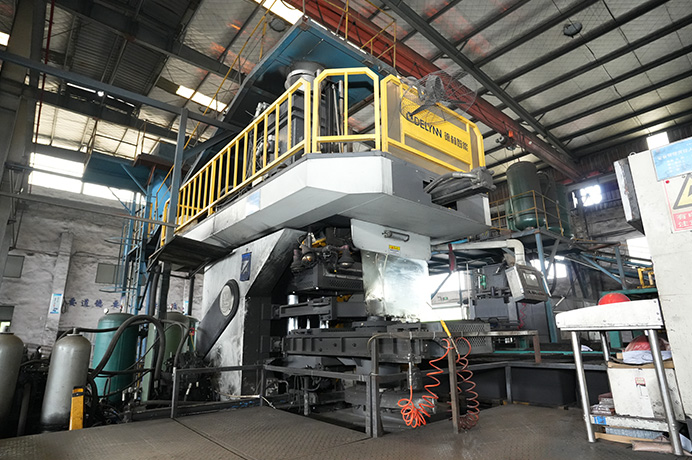
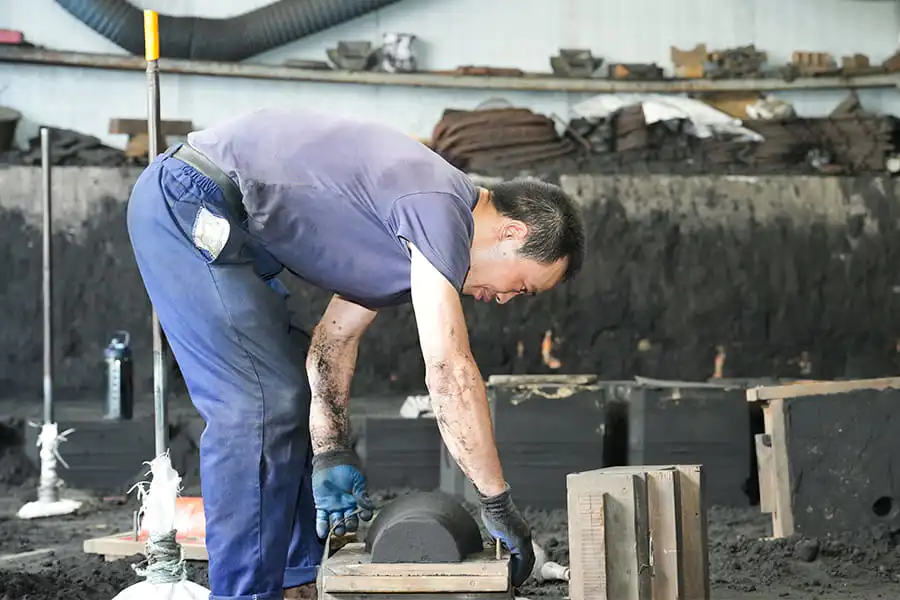
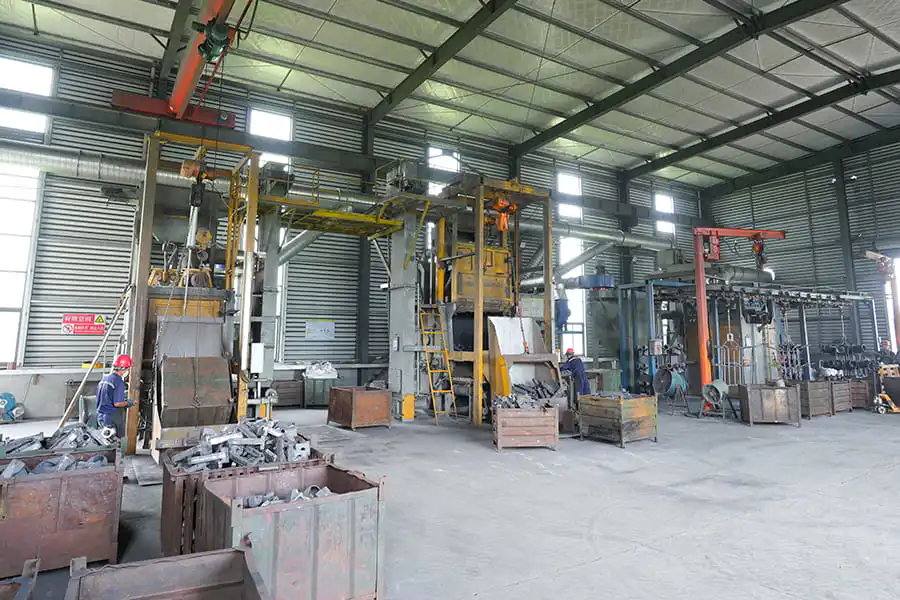
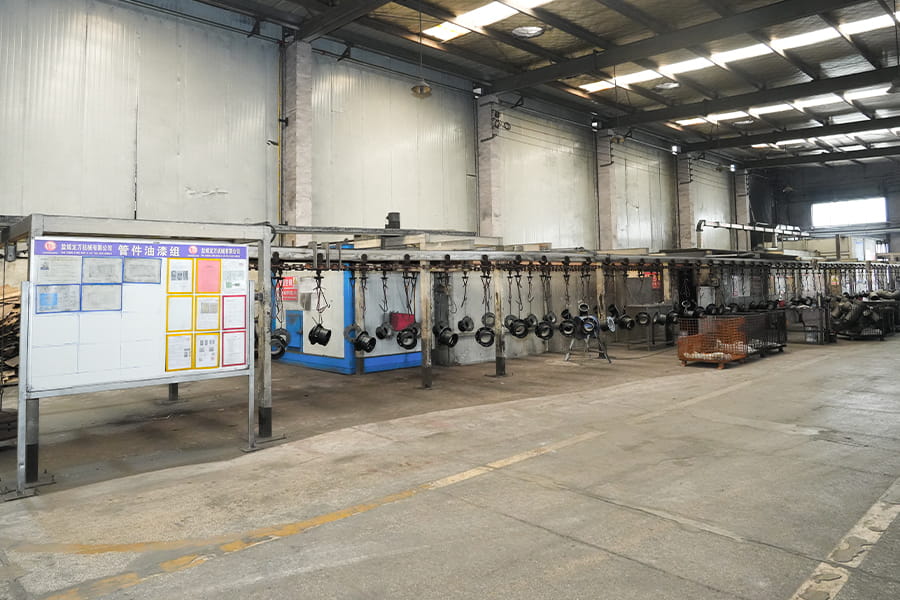
As a famous China Ductile Cast Iron Industrial Robot Accessories Foundry and Ductile Cast Iron Industrial Robot Accessories Suppliers, our company has a variety of molding equipment, including one vertical sand-shot horizontal parting boxless shot-press molding line with specifications of 610*510*240, 120 boxes/hour, suitable for mass production of small parts; one upper and lower sand-shot horizontal parting boxless shot-press molding line with specifications of 750*650*250, 100 boxes/hour, suitable for mass production of small and medium-sized parts; 3 sets of 1.25T medium-frequency electric furnaces; 3 cleaning shot blasting machines, and now planning a lost foam production line, suitable for 100Kg~1000Kg casting production, and planning an automatic spray painting line and an electrophoretic coating line at the same time, 3 CNC lathes and 3 lathes.
ODM Customization Expert
Advanced Production & Processing Equipment
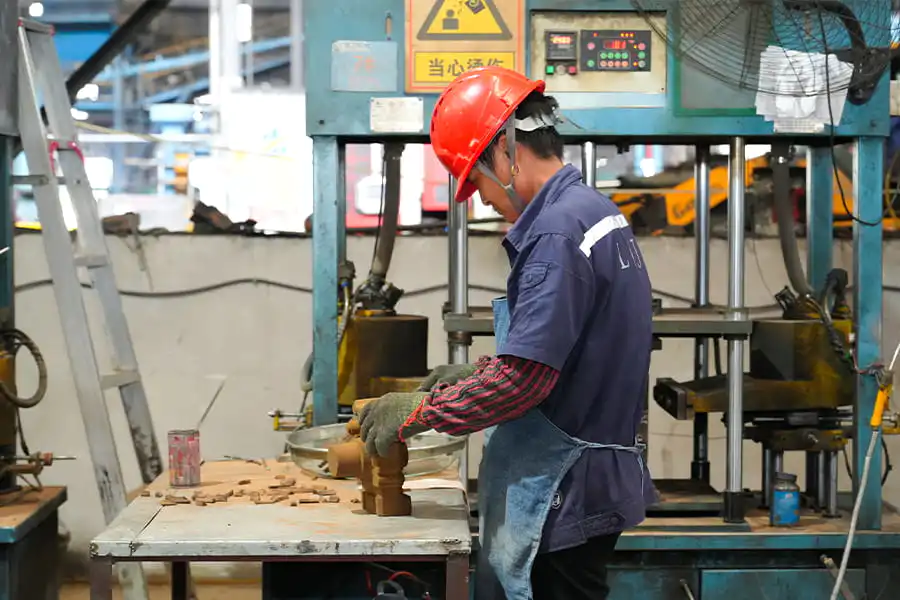
Longwan Machinery has a variety of advanced domestic and foreign molding equipment, including 2 fully automatic production lines for clay sand, 1 semi-automatic production line for clay sand, and 1 coated sand production line, with an annual production capacity of 15,000 tons.
Complete Inspection Flow
Strict Quality Inspection
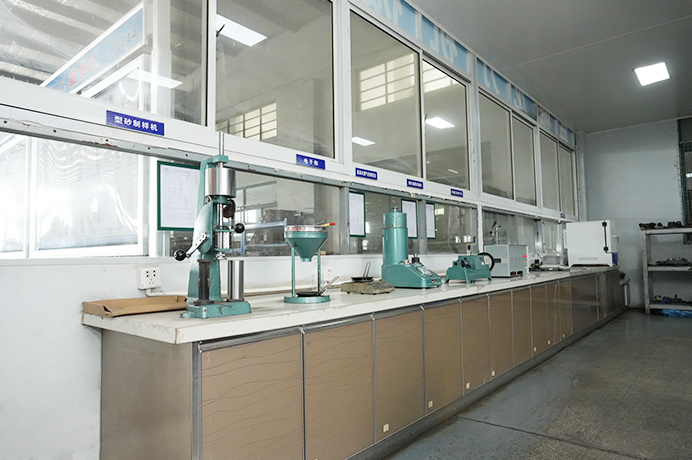
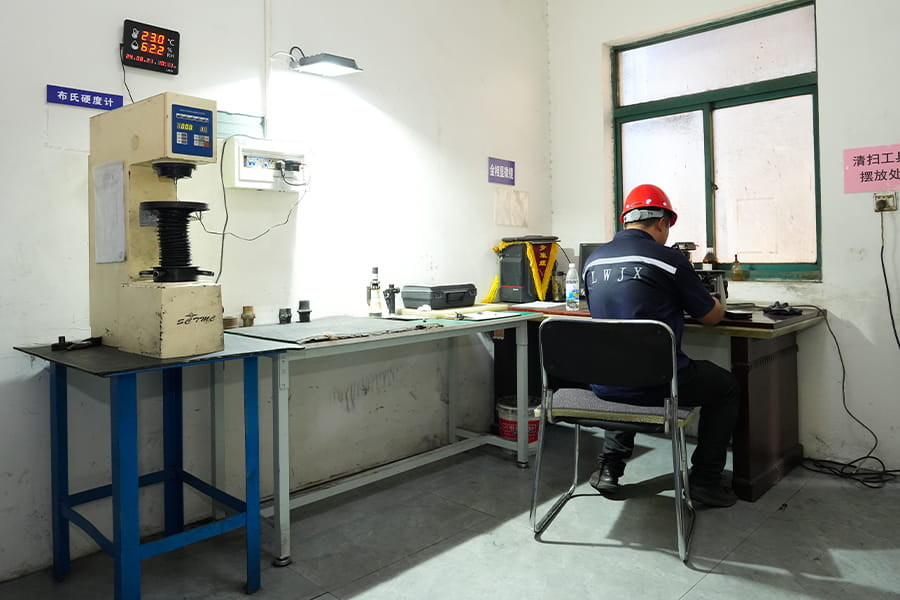
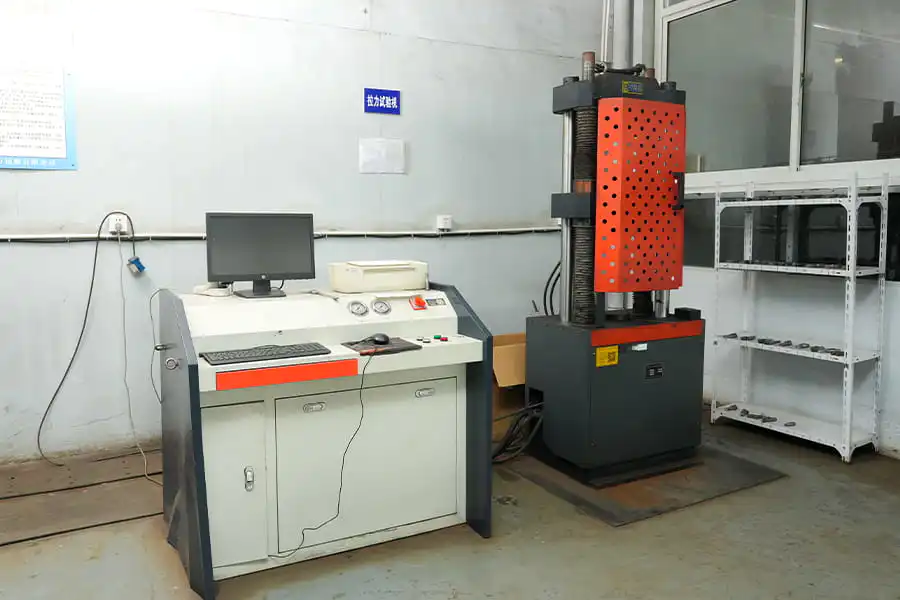
We have full-process testing equipment: spectrum analyzer, metallographic microscope, universal tensile testing machine, magnetic particle flaw detector, ultrasonic flaw detector, etc.
The above equipment can fully ensure that we can provide customers with high-precision final castings, and at the same time ensure that we meet customers' comprehensive testing requirements for physical and chemical properties of materials, non-destructive testing, high-precision geometric dimension testing, etc.
Professional Casting Expert
Comprehensive Casting Manufacturer
FAQ
-
QWhere are your products mainly exported to?A
Our products are mainly exported to multiple countries such as Germany, Japan, Italy, South Korea, and Australia.
-
QHow to deliver the goods to us?A
Usually, we ship by sea, which is very convenient for export.
Of course, if the customer's goods are urgent, we can also air freight them. Ningbo Airport and Shanghai International Airport are both very close to us.
-
QWhat's the payment term?A
When quoting, we will confirm the transaction method with you.
For mass production, we usually make a 50% advance payment in advance and then inspect and confirm the shipment before paying the remaining balance.
-
QHow to guarantee the quality of your goods?A
Firstly, there will be corresponding inspections after each process, and for the final completed product, we will conduct a full inspection according to customer requirements and international standards;
Then, we have advanced and complete top testing equipment in the industry: spectral analyzers, metallographic microscopes, universal tensile testing machines, magnetic particle testing machines, ultrasonic testing machines, etc.
The above equipment can fully ensure the provision of high-precision final castings to customers, while also meeting the comprehensive testing requirements of customers for material physical and chemical properties, non-destructive testing, high-precision geometric dimension testing, and so on.
-
QHow many employees of your company? what about the technicists?A
Our company has more than 120 employees, including 10 professional technicians and 5 engineers.
-
QHow about the capacity of your company?A
We have 2 fully automatic clay sand production lines, 1 semi-automatic clay sand production line, and 1 coated sand production line, with an annual production capacity of 15000 tons.
-
QDo you have some standard parts?A
No, currently we produce and customize according to the requirements based on the drawings provided by the customer.
-
QCan you do customized products?A
Yes, we are mainly doing customized products according to the customers’ drawings or samples.
-
QWhat applications do your products relate to?A
Our products cover almost all the applicable equipment manufacturing and machinery manufacturing and processing fields, mainly including automotive trucks, engineering machinery, agricultural machinery, reducers, water pumps, water treatment systems, and other fields.
-
Qwhat products can you offer?A
We mainly produce cast iron parts made of gray cast iron and ductile iron materials.
-
QAre you a direct manufacturer or trading company?A
We are a foundry and a manufacturer of cast iron parts.
-
QHow long can I get the feedbacks after we sent the inquiry?A
We will reply to you within 24 hours of the working day.
NEWS
-
How Is Grey Cast Iron Made? A Foundry's Step-by-Step Guide to Sand Casting
Grey cast iron has been poured into sand moulds for centuries, yet the questions buyers ask have barely changed: what actually goes into the furnace,...
READ MORE -
How Many Types of Cast Iron Are There? Four Main Types and Two Extended Families
Ask a room full of foundry engineers how many types of cast iron are there, and you will usually hear two numbers: four, or six. Both answers are cor...
READ MORE -
How Does Carbon Affect Steel? Understanding Strength, Hardness & Ductility
Carbon is the single most influential alloying element in steel. A shift of just a few tenths of a percent can turn a soft, bendable sheet into a har...
READ MORE -
How Is Ductile Iron Pipe Made? Inside the Foundry Process Step by Step
Ductile iron pipe has served as a backbone of modern water systems for decades. Engineers choose it because it combines pressure capacity, impact res...
READ MORE
Ductile Cast Iron Industrial Robot Accessories Industry knowledge
Yancheng Longwan Machinery Co., Ltd. is a China foundry that casts and machines ductile cast iron industrial robot accessories for robot builders, integrators and OEM assembly programmes. Our works in Yancheng, Jiangsu combine medium-frequency melting, boxless shot-press molding, CNC turning and in-house metallurgical testing, so robot components run through the same controlled flow as our automotive, agricultural machinery and reducer castings instead of being subcontracted. We produce to customer drawings or samples and supply either as-cast or fully machined parts, depending on the interface the robot design requires.
Ductile Cast Iron Industrial Robot Accessories We Manufacture
Our range covers the structural and load-bearing castings that sit between the robot frame, the joint drive and the end effector. Each family is produced as a drawing-controlled casting with the machining scope agreed at quotation stage.
- Base plates and mounting pedestals — floor or cell anchors that carry static and dynamic reaction loads from the arm.
- Joint and wrist housings — cast bodies around bearing seats, shaft bores and cover faces.
- Arm segments, braces and brackets — thin-to-medium section parts with pockets, ribs and cored lightening.
- Tool flange bodies and gripper carriers — machined faces and bolt circles that pick up end effectors.
- Gearbox and reducer housings for robot joints — castings related to our Ductile Cast Iron Reducer Accessories family and configured for the drive supplier's envelope.
- Cable clamps, counterweights, covers and guards — smaller parts suited to high-volume boxless molding.
Where Ductile Iron Fits on a Robot
Nodular graphite gives ductile iron a tensile and fatigue response well above grey iron at comparable cost, which is what robot structures need when a part carries alternating loads, absorbs impact from fast axis motion and still has to hold a machined bearing seat without distortion. Parts that are primarily decorative, vibration-damping at low load, or purely a cover are often better served by Grey Cast Iron Industrial Robot Accessories, and we quote both materials from the same drawing so the decision is made on load case rather than habit.
As-cast ductile iron suits housings and brackets where only mounting faces and bores are machined. Where the part becomes a locating interface — a joint centre, a flange register, a dowel pattern — we take the casting through CNC turning, drilling, milling and threading so that datums, bores and bolt circles are produced in the same setup logic as the mating component.
Product Range and Application Matching
| Component family | Application fit | Key specifications we confirm | Configuration options |
|---|---|---|---|
| Base plates and pedestals | Cell floor mounting, rail and gantry anchoring | Planarity, anchor hole pitch, rib layout, wall thickness | As-cast or face-machined, primed or painted |
| Joint and wrist housings | Axis bodies around bearing seats and shafts | Bore diameter and concentricity, seat roundness, face squareness | Bored and faced, tapped holes, bushing seats |
| Arm segments and brackets | Link structures, braces, reach extensions | Section transitions, cored pockets, hole patterns | Machined ends only or complete machining |
| Tool flange and gripper bodies | End effector mounting, quick-change interfaces | Flange register, bolt circle, perpendicularity to axis | Machined registers, dowel holes, threaded inserts |
| Joint gearbox housings | Servo and reducer integration inside the axis | Pilot diameters, bolt patterns, oil seal and cover faces | Machined joint faces, bearing bores, sealing faces |
| Clamps, counterweights, covers | Cable routing, balance mass, guarding | Mass tolerance, hole location, surface condition | Shot-blasted as-cast finish, painting, batch supply |
Melting, Molding and Machining Sequence
Robot accessory castings are produced on our vertical sand-shot horizontal parting boxless shot-press line, dimensioned 610 × 510 × 240 mm and running at 120 boxes per hour, or on the upper and lower sand-shot horizontal parting line at 750 × 650 × 250 mm and 100 boxes per hour. The first suits repeat production of small parts such as clamps and covers; the second covers small to medium housings and brackets. Three 1.25 T medium-frequency electric furnaces give the melting and alloying control needed for consistent nodularity and chemistry.
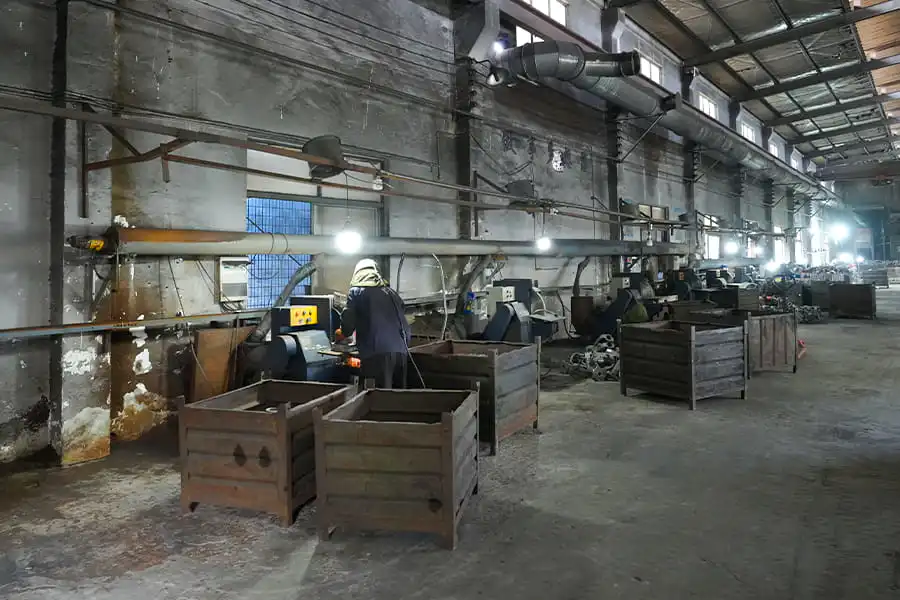
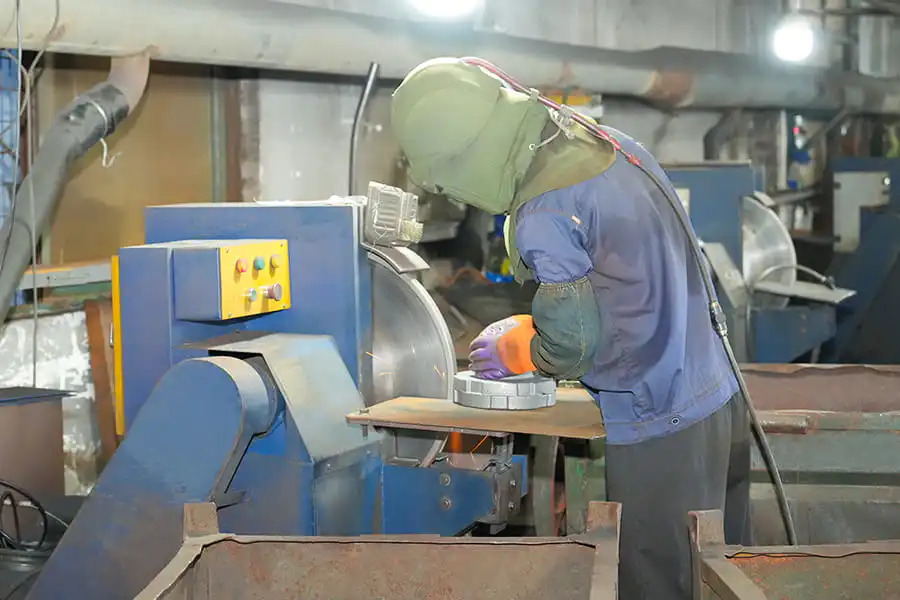
After pouring, castings are cleaned in shot blasting machines and then either packed as-cast or transferred to our three CNC lathes and three lathes for turning, drilling, milling and threading. Our annual casting capacity across two fully automatic clay sand lines, one semi-automatic clay sand line and one coated sand line is 15,000 tons, which allows us to hold a robot accessory programme alongside serial automotive work.
Inspection and Acceptance
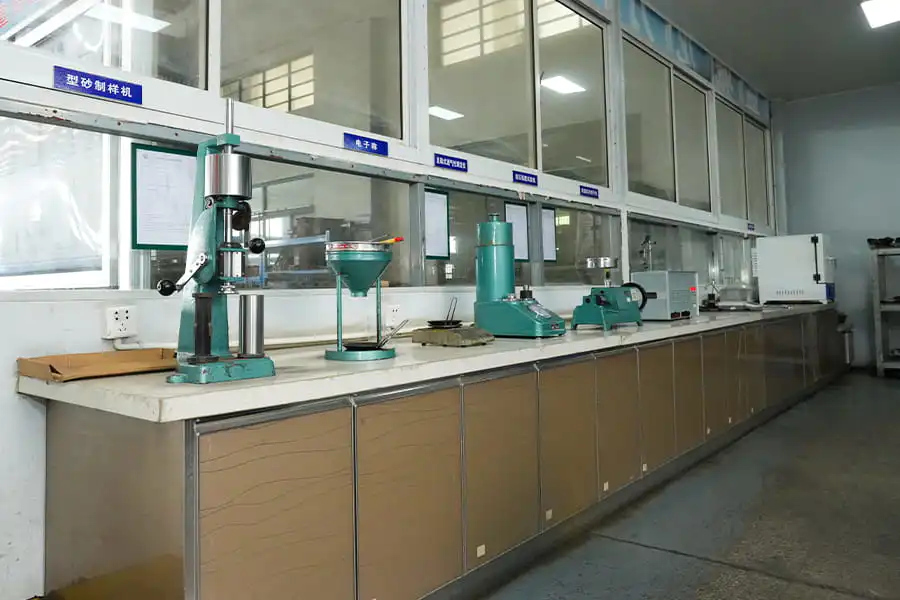
Our works operate to a complete IATF 16949:2016 system standard, with inspection at each process step and full inspection of finished products against customer requirements and international standards. Metallurgical verification includes a German SPECTRO direct-reading spectrometer, a universal tensile testing machine, a 3 T Brinell hardness tester, a sonic velocity meter and a metallographic microscope. Molding sand is controlled with a SAC hammer-type sample making machine, SWY hydraulic strength testing machine, SSZ vibration-type sand screening machine and SGS double-disc infrared dryer.
Non-destructive and dimensional verification — magnetic particle and ultrasonic flaw detection, plus precise geometric dimension checks — is applied where the drawing calls for it, so acceptance criteria for a robot joint housing are agreed before the first sample is cast.
Information We Use to Configure Your Solution
Because our production is drawing-driven rather than catalogue-driven, a workable proposal is built from a small set of inputs. We review these before quotation and raise anything ambiguous rather than assume a value.
- Drawing or sample with material grade, general tolerance block and any GD&T datums.
- Load and duty context — static or alternating load, joint position, expected cycle life and vibration exposure.
- Machining scope — which faces, bores, threads and registers we machine, and which the customer completes.
- Volume and rhythm — annual quantity, batch size and whether the part is a serial programme or a low-volume variant.
- Interface data — mating bearing, reducer, servo or end effector envelope, including pilot and bolt pattern dimensions.
- Acceptance requirements — inspection plan, sampling level, NDT scope, dimensional report and documentation language.
- Finish and packaging — as-cast, primed, painted or coated, plus packaging design and labelling for your line.
Development Cycle, Documentation and Delivery
Every new robot accessory follows the same route: drawing and specification confirmation with quotation, pattern and mould making, sample castings and machining, customer sample approval, then serial production, inspection and shipment. Our R&D engineers run process simulation before tooling is cut so that filling, feeding and shrinkage are addressed on screen rather than in the first castings, which shortens development and reduces scrap on thin-section brackets.
Serial supply is packed under our complete casting packaging service, with protection chosen for machined faces and threads. Consignments move by sea as standard, or by air when a programme is urgent, using the ports and airports close to our Yancheng plant. Spare and repeat batches are produced from the retained pattern and drawing revision, and our after-sales team handles replacement enquiries and technical questions on the same route as the original order.
Why Robot Programmes Use Our Foundry
Our customer list includes SAIC Group, Deere, Bonfiglioli (China), Shanghai Beixu and Yaskawa Electric, so the discipline applied to robot castings is the discipline applied to automotive and drive-train parts. A single supplier holds the melt, the molding line, the CNC operation and the metallurgical laboratory, which keeps traceability and change control in one place for the full life of the part.
As a Ductile Cast Iron Industrial Robot Accessories manufacturer, we cast and machine the joint, base, arm and end effector accessories covered here, and quote grey iron alternatives from the same tooling where the load case allows. The wider Ductile Cast Iron range shows the other accessory families produced on the same lines.
Frequently Asked Questions
Do you supply raw castings or finished machined robot accessories?
Both. Parts can be shipped as-cast and shot-blasted, or fully machined on our CNC lathes and lathes with turning, drilling, milling and threading completed. The split is agreed from the drawing so that only the faces, bores and threads your assembly needs are machined.
Which ductile iron grades can be used for robot accessories?
The grade is nominated on the drawing or agreed during drawing review against the load case, with chemistry and nodularity verified by spectrometer and metallographic examination, and mechanical results confirmed by tensile and Brinell hardness testing. Where a part needs higher ductility rather than strength, we will say so before tooling is made.
What part sizes suit your molding lines?
The 610 × 510 × 240 mm boxless line is used for high-volume small parts at 120 boxes per hour, and the 750 × 650 × 250 mm line for small to medium parts at 100 boxes per hour. This covers most robot brackets, clamps, covers and housings, with heavier castings handled through our planned lost foam route in the 100 kg to 1000 kg range.
How do you keep machined interfaces consistent between batches?
Datums, bore positions and bolt patterns are set from the drawing, machined on calibrated CNC equipment and checked against the agreed inspection plan, with in-process checks between operations and full inspection of finished products. Any dimension the robot assembly depends on is written into the acceptance criteria before serial production begins.
What do you need to prepare a quotation?
A drawing or sample, material grade, machining scope, annual volume and batch size, finish requirement, inspection and documentation expectations, and packaging or labelling instructions. We normally return feedback within 24 hours of a working day.
Can you develop a new robot accessory from a sample only?
Yes. We reverse-draw from a supplied sample, produce a pattern, cast and machine a sample for your approval, and only then move to serial production. Tooling, sample approval and revision control stay with us for repeat orders and spare parts.

Longwan Machinery adheres to the corporate purpose of "High
quality, good reputation, customer priority, service precedence".
- Service
- ODM & OEM
- CAPACITIES
- Contact Infor.
- [email protected]
- +86-515-83658999
- +86-152 5109 2111
- Group 2, Dingxi Village, Caoyan Town, Dafeng District, Yancheng City, Jiangsu, China
Mobile QR Code
Copyright © 2024 Yancheng Longwan Machinery Co., Ltd.All Rights Reserved.
Powder By: 
OEM/ODM Ductile Cast Iron Industrial Robot Accessories Foundry
