

 English
 русский
 Deutsch
Content
Ductile iron pipe has served as a backbone of modern water systems for decades. Engineers choose it because it combines pressure capacity, impact resistance, and corrosion performance in a way that few other materials can match. What many buyers do not realize is that those properties are not simply inherited from the metal. They are created step by step in the foundry, through a process that demands precise chemistry, careful timing, and disciplined quality control. This article walks through how ductile iron pipe is made, from melt to finished pipe, and explains what each stage means for the final product.
Raw Materials and Melting
Every ductile iron pipe begins with a carefully balanced furnace charge. Foundries typically combine high-quality scrap steel, pig iron, and recycled foundry returns, along with carbon and silicon additions. These materials are melted in an electric induction furnace at temperatures above 1,450°C.
The chemistry of the melt is the first control point. Carbon and silicon contents directly influence how graphite will form later, while elements such as sulfur and phosphorus are kept low. A typical base iron composition falls within these ranges:
- Carbon: 3.0-3.9%
- Silicon: 1.8-2.8%
- Manganese: 0.2-0.6%
- Sulfur: kept as low as possible
Reaching the correct composition before treatment is essential. If the base iron chemistry drifts outside its window, no amount of downstream adjustment can fully correct the result.
Spheroidization: Creating Nodular Graphite
The most distinctive step in ductile iron production is spheroidization, also called nodulization. Once the iron is molten and the composition is confirmed, the melt is transferred to a treatment ladle where a magnesium-containing alloy is added.
Magnesium is the key to the entire ductile iron family. In ordinary gray iron, carbon precipitates as sharp, flaky graphite flakes. Those flakes act as stress concentrators and give gray iron its brittle character. When magnesium is present in the right range, it changes the way carbon solidifies. Instead of flakes, the graphite grows as spheres, or nodules. Spheroidal graphite distributes stress evenly through the metal matrix, which is why ductile iron can bend, absorb impact, and resist cracking.
The treatment is fast and energetic. Magnesium vaporizes in the hot metal, creating a vigorous reaction that must be contained and controlled. Residual magnesium in the final iron typically falls between 0.02% and 0.06%, a small amount with an outsized effect. Samples are taken and checked under a microscope before the iron is allowed to move forward. If the nodularity is insufficient, that batch does not proceed to casting.
Centrifugal Casting
Ductile iron pipe is almost universally produced by centrifugal casting. In this process, treated molten iron is poured into a rapidly rotating mold. The centrifugal force presses the liquid metal against the mold wall, where it solidifies into a dense, uniform pipe wall.
Two mold types are common. Water-cooled metal molds are widely used for smaller diameters, while sand-lined molds are preferred for very large pipes. In both cases, the mold speed is calculated from the pipe diameter and wall thickness. Too slow a speed leaves the inner surface uneven; too high a speed can cause segregation of alloy elements.
As the pipe forms, the mold continues to rotate until solidification is complete. The rapid cooling against the water-cooled mold also produces a fine-grained structure that contributes to the pipe's mechanical strength. The finished tube is then extracted, cut to length, and moved to the next stage. Centrifugal casting provides an excellent metallurgical structure because it produces a dense outer skin, refined grain size, and an interior surface that is smooth enough for lining.
Annealing: Developing Ductility
As-cast ductile iron contains carbides and a mixed matrix structure that can make the pipe hard but brittle. To unlock the material's full toughness, the pipe passes through an annealing furnace. The pipe is heated to around 900-950°C, held for a controlled period, and then cooled slowly through the critical transformation range.
Annealing serves two important purposes. It decomposes any remaining carbides, and it produces a ferritic or ferritic-pearlitic matrix around the graphite nodules. The result is the combination of strength and elongation that ductile iron is known for. Proper annealing also relieves internal stresses from the casting process, giving the pipe dimensional stability. This is what allows ductile iron pipe to survive ground movement, heavy traffic loads, and pressure surges without cracking, something that earlier cast iron pipe could not reliably offer.
Lining and External Coating
Heat-treated pipes are then prepared for service. The interior is lined with cement mortar using a high-speed spinning head. The centrifugal action distributes a smooth, dense mortar layer over the inner wall. The lining is cured under controlled humidity to reach its design strength.
Cement lining provides three benefits: it keeps the flow surface smooth, which reduces pumping costs; it prevents the formation of tubercles and scale; and it isolates the water from the metal for stable water quality. A well-applied lining is the difference between a pipe that delivers clean water for fifty years and one that suffers early flow loss. For aggressive water or severe service conditions, alternative linings such as epoxy or polyurethane are sometimes specified.
The outside of the pipe also receives protection. A typical system applies a metallic zinc layer followed by a bituminous or epoxy topcoat. The zinc acts as a sacrificial barrier, while the topcoat protects the zinc during handling and installation. In particularly corrosive soils, additional polyethylene sleeving can be added.
Quality Testing and Inspection
Quality control runs through every stage, but final testing is where the product must prove itself. Pipe samples and finished pipes are subjected to a range of mechanical, metallurgical, and dimensional checks. A typical testing plan includes the following:
| Test | Purpose | Typical Requirement |
|---|---|---|
| Hydrostatic pressure test | Confirms pressure integrity | Each pipe tested to its rated class |
| Metallographic examination | Verifies graphite nodularity | Nodularity above 80% |
| Chemical analysis | Checks composition | Meets grade specification |
| Dimensional inspection | Checks diameter and socket fit | Within standard tolerances |
These tests are not just box-ticking exercises. They verify that the pipe will hold pressure under service conditions, that the graphite has remained nodular through the full production run, and that the dimensions match the joint system so installation goes smoothly. For buyers, the depth of a foundry's testing facility is a direct indicator of the reliability they can expect in the field.
Custom Ductile Iron Fittings and Components
No pipeline is complete with straight pipe alone. Elbows, tees, reducers, flanges, and other fittings are required to route water around obstacles, connect different pipe sizes, and tie into valves and pumps. As a casting factory with years of experience in ductile and gray iron, we understand the full manufacturing chain from chemistry control through machining and final inspection.
If you are looking for a deeper comparison of fitting production, our article on how ductile iron pipe fittings are made covers the casting and machining steps in more detail. And if you are evaluating a supplier for your own project, look for a foundry that can handle not only pipe but the wider family of components that connect, control, and protect your system.
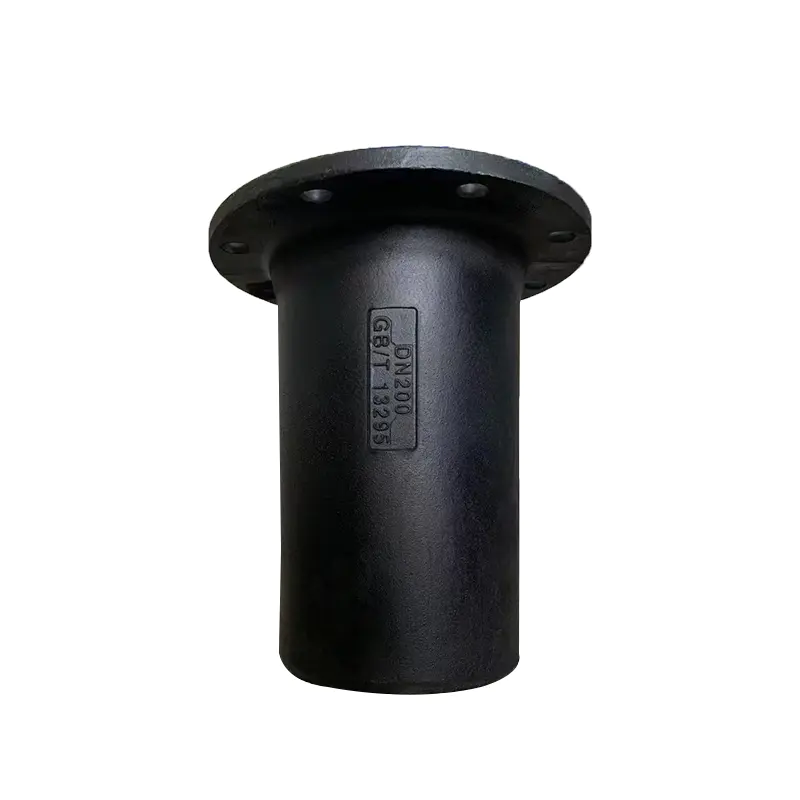 Ductile Iron Pipe Fittings Manufacturer with Full In-House TestingThis manufacturer offers ductile iron fittings for water and fire systems, backed by automated casting lines, 15,000-ton annual capacity, and comprehensive quality inspection equipment—relevant when assessing supplier capabilities.View Product →