

 English
 русский
 Deutsch

Content
Ask a room full of foundry engineers how many types of cast iron are there, and you will usually hear two numbers: four, or six. Both answers are correct. Four covers the classic families that most textbooks and material standards describe as the basic types of cast iron. Six is what you get once compacted graphite iron and alloy cast iron are counted alongside them. The number that matters most, of course, is the one that fits the part you actually need to make.
Below we walk through each type, explain what separates them at the microstructure level, and show where they tend to turn up in real products, from engine brackets to water main fittings.
The Short Answer: Four Basic Types of Cast Iron
The most widely used classification scheme divides cast iron into four basic types: white cast iron, grey cast iron, ductile (nodular) cast iron, and malleable cast iron. The dividing lines come down to three things: how the carbon is held inside the metal, what shape the graphite takes, and how the surrounding matrix is structured.
- White cast iron - most of the carbon stays bonded as iron carbide rather than free graphite, so the fracture surface looks bright and silvery. It is hard, highly abrasion resistant, and famously difficult to machine.
- Grey cast iron - carbon precipitates as flake graphite, and those flakes give the fracture its grey, slightly rough appearance. Expect excellent vibration damping and thermal conductivity with moderate strength.
- Ductile cast iron - often called nodular iron because the graphite forms spheroids instead of flakes. The rounded shape stops graphite from behaving like a network of internal cracks, so both ductility and tensile strength rise considerably.
- Malleable cast iron - white iron that has been heat treated for a long period until the carbides break down into irregular clusters of temper carbon. Tough and machinable, but the cycle is slow and works best on thin sections.
If someone asks how many types of cast iron exist and expects a one-word answer, "four" is the safest reply, because it matches the classification used in most engineering references.
Two More Types Many Lists Leave Out
Once you move from the classroom to the shop floor, two additional families start appearing in specifications, which is why many suppliers quote a total of six.
Compacted graphite iron (CGI)
CGI sits neatly between grey and ductile iron. Its graphite takes a worm-like, or vermicular, form that is connected enough to keep thermal conductivity and damping high, yet rounded enough to deliver roughly double the tensile strength of grey iron. That balance is exactly what modern diesel engine blocks and cylinder heads need.
Alloy cast iron
Alloy irons start from one of the four base types and then add elements such as nickel, chromium, molybdenum, or copper to push specific properties further. The result is a family of heat-resistant, corrosion-resistant, or wear-resistant grades used in mill liners, hot gas components, and heavy-duty pump parts. Because the base material can vary, alloy iron is best understood as a modification rather than a separate graphite family.
All Six Types Compared Side by Side
The table below sums up how the six types compare on the factors that usually decide a material call: graphite form, strength range, machinability, and typical applications.
| Type | Graphite form | Typical tensile strength | Machinability | Common applications |
|---|---|---|---|---|
| White | Carbides, little free graphite | 200 to 400 MPa | Poor | Mill liners, wear plates, slurry pump impellers |
| Grey | Flake | 100 to 300 MPa | Excellent | Machine bases, valve bodies, brake drums, housings |
| Ductile | Spheroidal nodular | 400 to 800 MPa | Good | Suspension parts, pipe fittings, gears, pump housings |
| Malleable | Temper carbon clusters | 300 to 600 MPa | Good | Pipe fittings, small brackets, agricultural hardware |
| Compacted graphite | Vermicular, worm-like | 300 to 500 MPa | Moderate | Diesel engine blocks and cylinder heads |
| Alloy | Depends on base type | Varies by grade | Varies | Heat-resistant and wear-resistant specialty components |
How Metallurgists Actually Classify Cast Iron
Counting types is easy; understanding why a given melt becomes grey iron instead of white iron is where things get interesting. Standard references such as the ASM handbook classify cast iron using three criteria: fracture aspect, graphite shape, and the microstructure of the matrix.
- Fracture aspect describes what the broken surface looks like. A silvery, crystalline break points to white iron, while a dull grey break points to flake graphite.
- Graphite shape separates flake, spheroidal, vermicular, and temper carbon structures, and it has the single largest influence on mechanical behaviour.
- Matrix microstructure covers whether the metal around the graphite is ferritic, pearlitic, or a mixture, which in turn controls hardness, strength, and wear resistance.
It is worth remembering that these types are not entirely separate materials. Carbon equivalent, cooling rate, inoculation, and heat treatment can all steer the same furnace charge toward different outcomes. A thin section may chill to white iron while a thick section of the same iron solidifies grey. That is precisely why casting suppliers ask about wall thickness before quoting a grade, and why we treat the drawing and the process as one conversation. If you want a closer look at two of the most common families, our note on grey versus ductile iron goes into more depth.
Matching the Type to the Part
In practice, most industrial components land on one of two materials. Ductile iron handles shock, fatigue, and higher loads, which makes it the natural choice for automotive and machinery parts that see repeated stress. Grey iron wins wherever vibration damping, thermal stability, and cost efficiency matter more than raw strength, which is why it still dominates machine tool bases, housings, and valve components.
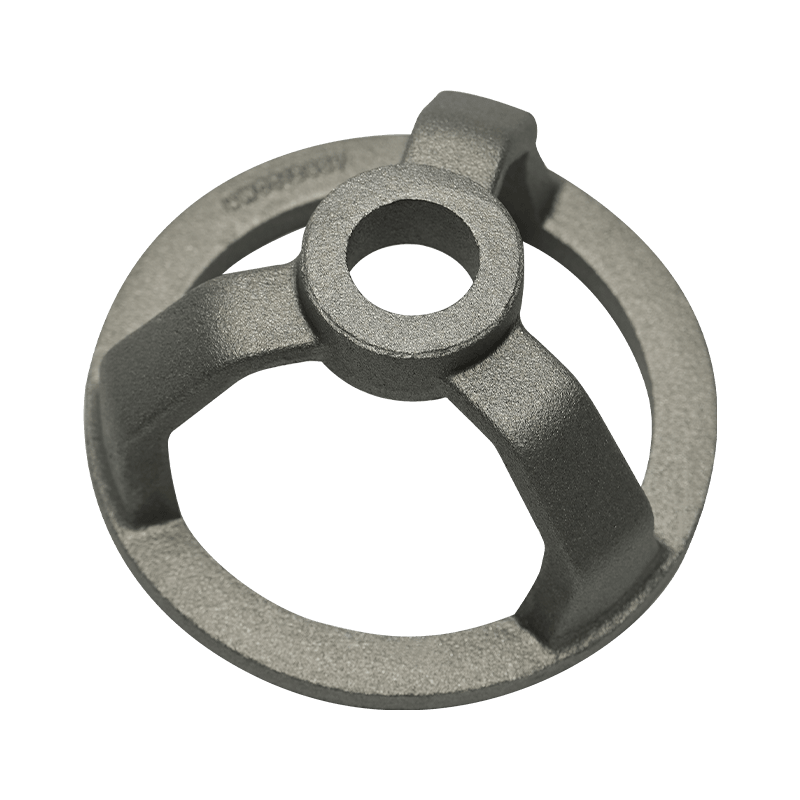
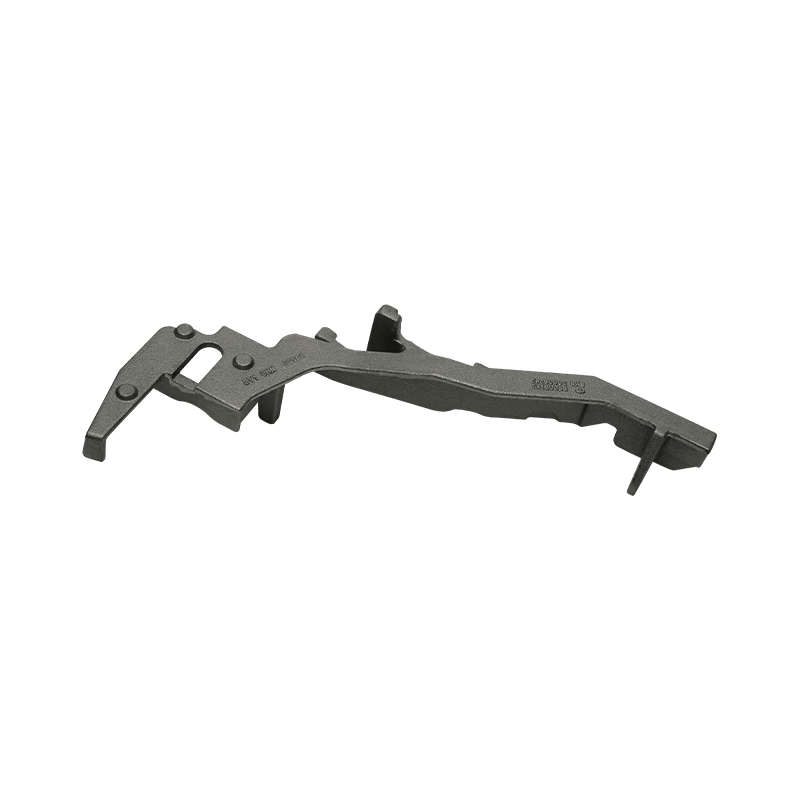
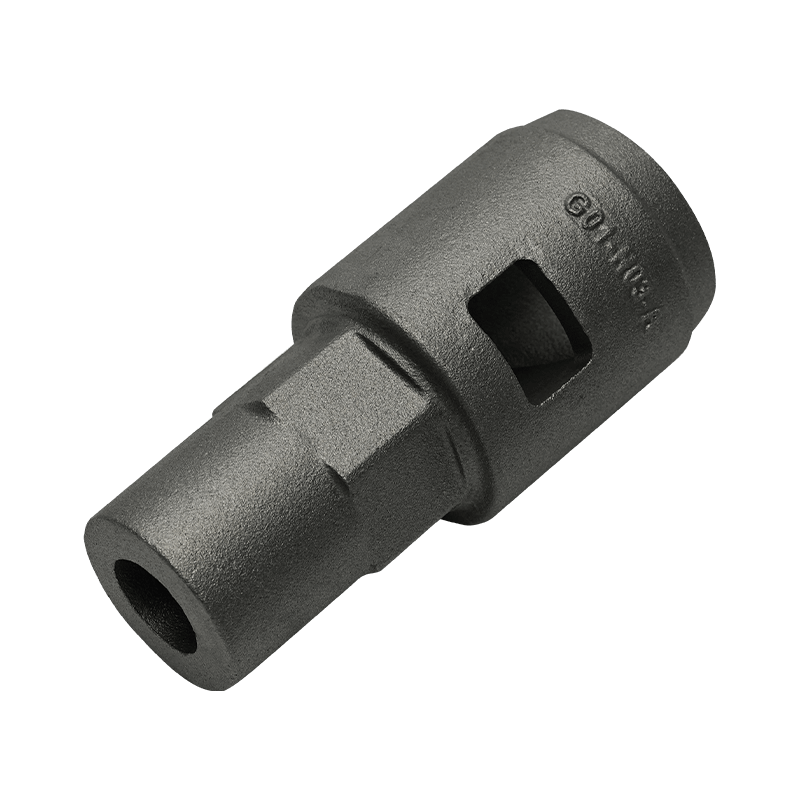 Ductile Cast Iron Automotive Parts for Vehicle SystemsExplore ductile iron calipers, brackets, support arms, and cylinder blocks for braking, suspension, and engine systems, with OEM/ODM customization options.View Product →
Automotive castings are a good illustration. Brackets, calipers, and suspension components made in ductile iron can absorb impact without cracking, while the same part in grey iron would be lighter on the budget but far more brittle under load.
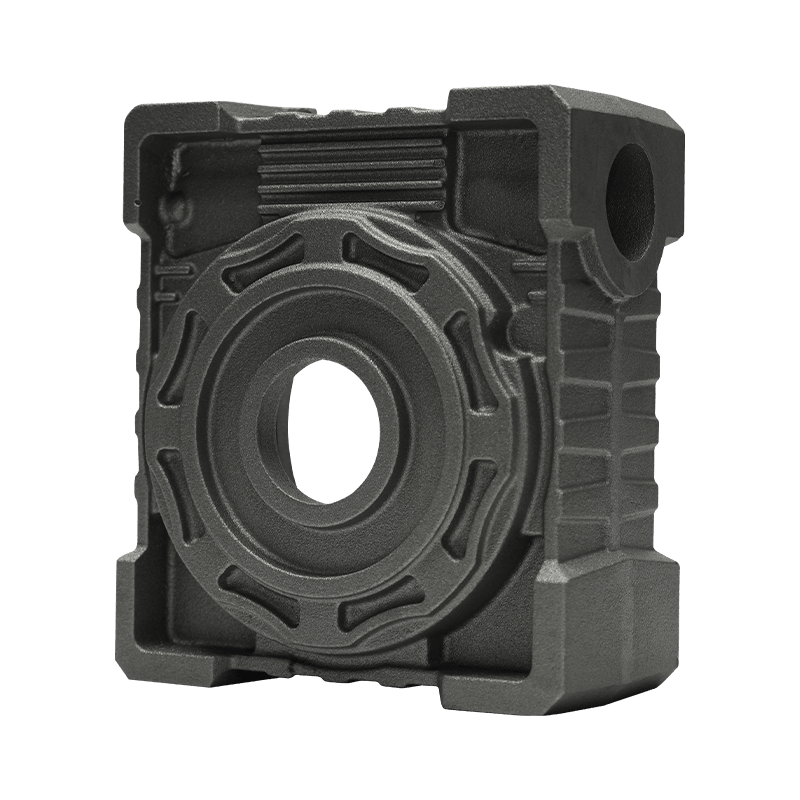
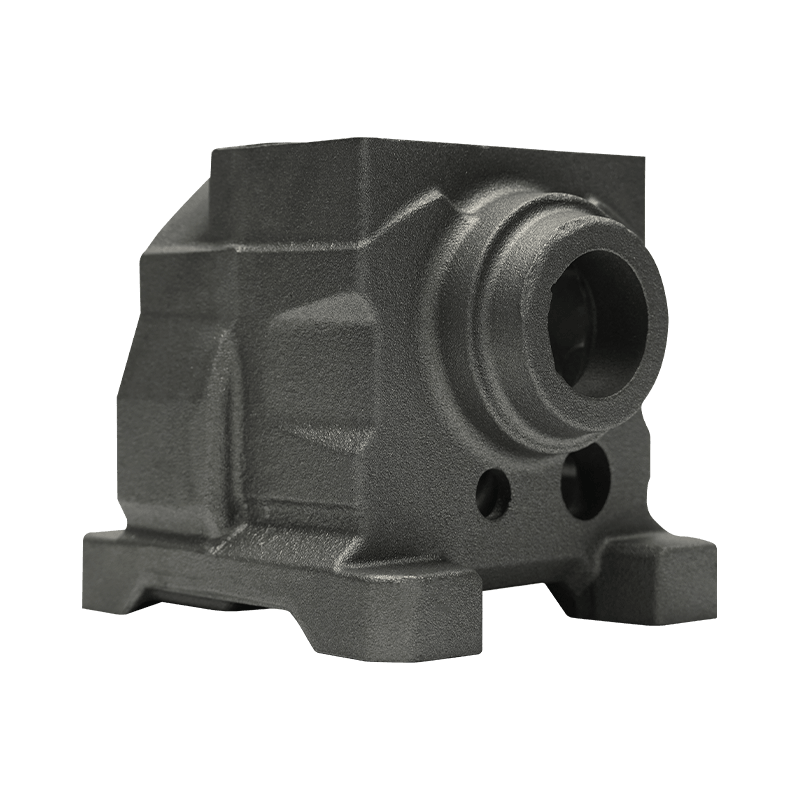
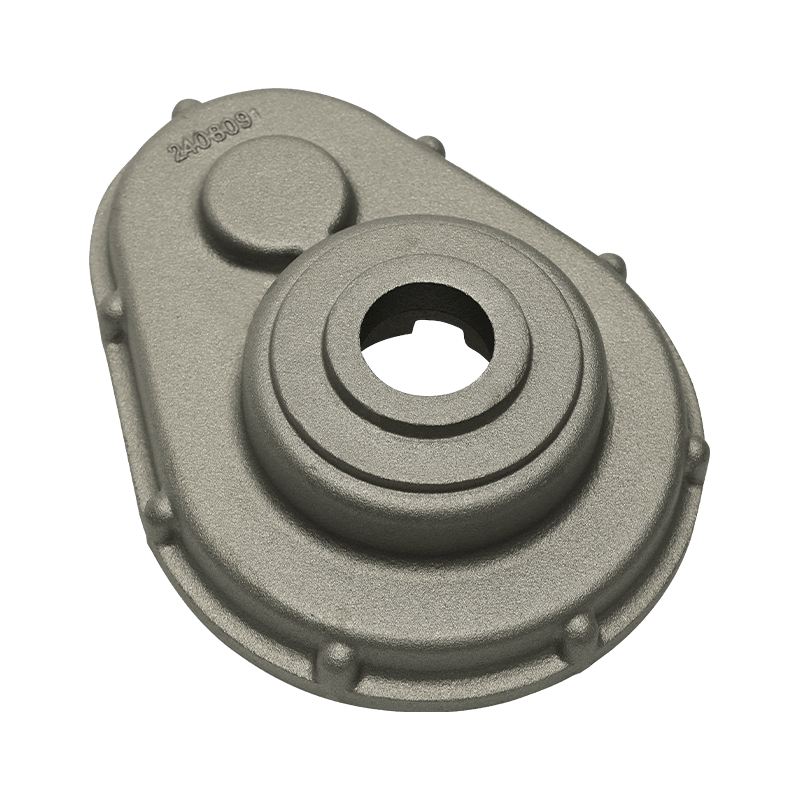 Grey Cast Iron Valve Accessories and Box CoversReview grey iron valve accessories, including box covers, for sealing, strength, and maintenance in fire-fighting, automotive, agricultural, industrial, and water-treatment valve systems.View Product →
Valve bodies and fluid-handling hardware sit at the other end of the spectrum. Here, grey iron's damping and dimensional stability under thermal cycling often matter more than peak tensile numbers, especially in systems that expand and contract through the working day.
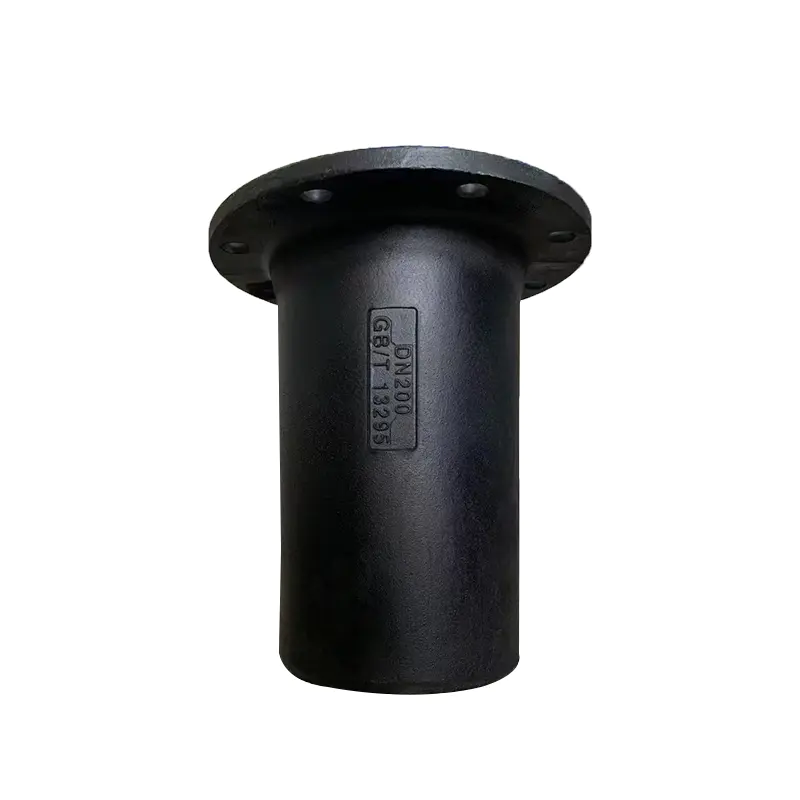 Ductile Iron Pipe Fittings for Water and Fire ProtectionView corrosion-resistant ductile iron pipe fittings for water treatment, fire protection, and distribution systems, with custom options and long service life in demanding pipelines.View Product →
Then there is the pipeline world. Ductile iron pipe fittings combine the pressure containment of a casting with enough flexibility to survive ground movement, which is why they are so common in water transmission and fire protection networks.
What This Means When You Order Castings
Knowing that there are four or six types of cast iron is useful background, but a specification still needs to answer a few practical questions: what loads the part will see, how thick the walls are, what surface finish is required, and how the component will be machined afterwards.
We have been casting in Yancheng since 2006, producing both ductile and grey iron components as well as ductile iron pipe fittings for customers across the automotive, agricultural machinery, reducer, valve, pump, semiconductor, and industrial robot sectors. Alongside our standard product families, we take on ODM and OEM work, which means a customer can send a drawing or a sample and we work from there. In our experience, the most useful conversation happens early, before the grade is locked in, when material choice can still be matched to the real service conditions of the part.
Quick Answers to Common Questions
Is ductile iron a type of cast iron?
Yes. Ductile iron is one of the four basic types of cast iron. It is produced by adding a small amount of magnesium or cerium to the melt so the graphite grows as nodules rather than flakes.
Which type of cast iron is the strongest?
Ductile iron generally offers the highest combination of tensile strength and ductility, commonly quoted in the 400 to 800 MPa range depending on grade. Compacted graphite iron follows closely behind.
Can the same foundry produce more than one type?
Absolutely. The base chemistry is similar; what changes is the treatment, inoculation practice, and cooling control. A foundry that pours ductile iron usually has the equipment to pour grey iron as well, which is why both are often offered side by side.
Is cast iron the same as steel?
No. Both are iron-carbon alloys, but cast iron typically contains more than 2 percent carbon, while steel sits below that threshold. The higher carbon content is what allows cast iron to be poured into complex shapes.
So when the question comes up again, the short answer is four basic types, six if you count the extended families. The longer, more useful answer is that the type matters far less than the match between material, geometry, and the job the part has to do. Get that right, and the classification stops being trivia and starts being a design advantage.