

 English
 русский
 Deutsch
Content
- 1 Why Ductile Cast Iron Is Used in Water Pump Parts
- 2 Common Ductile Iron Water Pump Accessories
- 3 Comparing Ductile Iron to Other Pump Part Materials
- 4 Applications Across Water Pump Systems
- 5 Coatings and Corrosion Protection for Pump Parts
- 6 What to Check When Buying Ductile Iron Pump Parts
- 7 Maintenance Practices That Extend Component Life
- 8 Frequently Asked Questions
Ductile cast iron water pump accessories — including pump casings, impellers, brackets, and bearing housings — are favored because ductile iron combines high tensile strength with impact resistance and corrosion tolerance, giving pump components a service life that frequently exceeds 20 years under continuous operation. These properties make ductile iron the standard material choice for centrifugal and submersible pump parts used in municipal water supply, irrigation, wastewater handling, and industrial fluid transfer systems.
This article explains which water pump parts are commonly made from ductile cast iron, why the material outperforms alternatives in pump applications, how to evaluate quality when purchasing, and what maintenance practices extend the life of these components.
Why Ductile Cast Iron Is Used in Water Pump Parts
Water pumps operate under a combination of internal pressure, vibration, and mechanical stress from rotating components, conditions that quickly fatigue brittle materials. Ductile cast iron's spheroidal graphite structure allows it to absorb shock and flex slightly under load rather than cracking, giving it tensile strength of up to 420 MPa and elongation values of 10% or more — properties that gray cast iron, with less than 1% elongation, simply cannot match.
This durability translates directly into fewer unplanned pump failures. Municipal water utilities and industrial plants that specify ductile iron for pump casings and housings typically report longer intervals between major overhauls compared to systems built with gray iron or lower-grade alloys, particularly in installations subject to pressure surges or water hammer events.
Common Ductile Iron Water Pump Accessories
Several core water pump components are commonly manufactured from ductile cast iron due to their structural and pressure-bearing roles within the pump assembly.
Pump Casings and Volutes
The casing is the outer shell that contains the impeller and directs fluid flow into the discharge pipe. Because the casing bears the full working pressure of the pump, ductile iron's strength and pressure tolerance make it the standard choice for casings rated up to 300 psi or higher in industrial applications.
Impellers
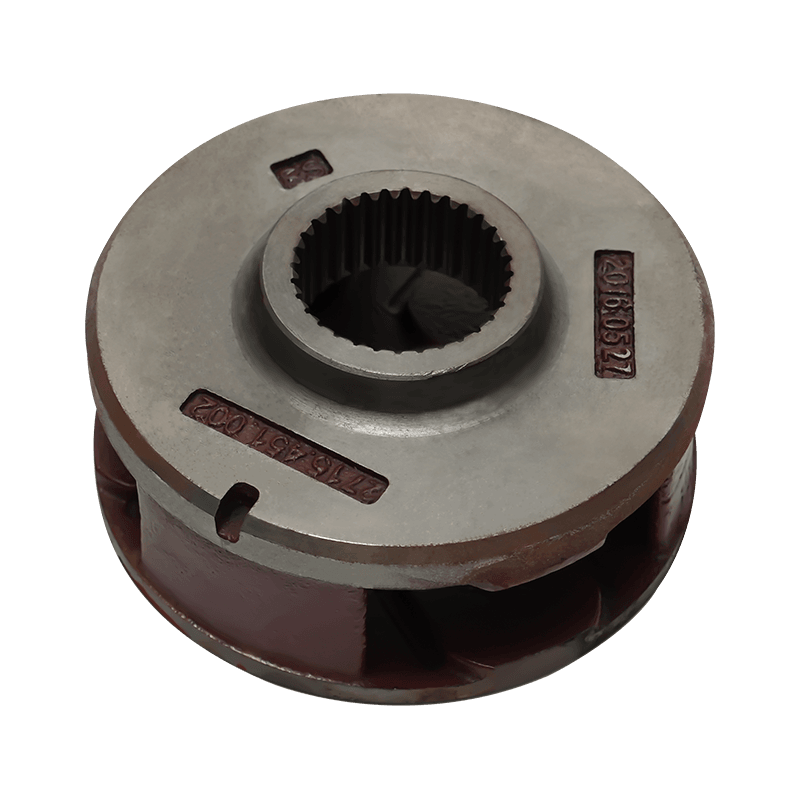
While bronze and stainless steel are also common impeller materials, ductile iron impellers are widely used in clean water and moderate-solids applications where cost efficiency matters and the fluid is not highly corrosive or abrasive.
Bearing Housings and Brackets
Bearing housings support the pump shaft and must resist the vibration generated by rotating machinery without deforming. Ductile iron's damping characteristics and rigidity help maintain precise shaft alignment, which directly affects bearing life and pump efficiency over time.
Base Plates and Mounting Feet
Base plates anchor the pump assembly to its foundation and absorb vibration during operation. Ductile iron plates provide the rigidity needed to prevent misalignment between the pump and motor shaft, which is a common cause of premature seal and bearing failure.
Comparing Ductile Iron to Other Pump Part Materials
Pump manufacturers choose between several materials depending on the fluid handled, pressure requirements, and budget. The table below compares ductile iron against common alternatives for pump component manufacturing.
| Material | Tensile Strength | Corrosion Resistance | Relative Cost |
|---|---|---|---|
| Ductile Iron | 420 MPa | Good (with coating) | Low–Moderate |
| Gray Cast Iron | 170 MPa | Fair | Low |
| Bronze | 280 MPa | Excellent | High |
| Stainless Steel | 515 MPa | Excellent | High |
Ductile iron sits in a practical middle ground — it delivers significantly better strength than gray iron at a fraction of the cost of bronze or stainless steel, which is why it remains the default choice for general-purpose water pump components handling clean or moderately treated water.
Applications Across Water Pump Systems
Ductile cast iron water pump accessories are used across a wide range of pump types and industries, each relying on the material's strength and durability under different operating conditions.
- Municipal water supply and booster pump stations
- Agricultural irrigation pumps handling high-volume flow
- Wastewater and sewage lift station pumps
- Fire protection and sprinkler system pumps
- Industrial cooling water circulation systems
In fire protection systems specifically, reliability is non-negotiable — pumps must activate instantly and operate without failure during an emergency. Ductile iron casings and housings are widely specified in these systems because their resistance to sudden mechanical stress reduces the risk of component failure precisely when the pump is needed most.
Coatings and Corrosion Protection for Pump Parts
While ductile iron resists corrosion better than gray cast iron, prolonged exposure to water, especially water with high mineral or chemical content, still requires protective treatment to maximize component life.
Epoxy Coatings
Fusion-bonded epoxy is commonly applied to interior surfaces of pump casings that contact water directly, preventing rust buildup that could otherwise restrict flow or contaminate the water supply.
Zinc and Paint Finishes
Exterior surfaces exposed to atmospheric moisture, such as pump housings installed outdoors or in humid pump rooms, typically receive a zinc-rich primer followed by an enamel or epoxy topcoat to prevent surface oxidation.
Selecting a coating rated for the specific water chemistry involved — particularly in systems with high chlorine content or brackish water — is essential, since an unsuitable coating can degrade faster than the base metal itself, leading to premature corrosion and increased maintenance costs.
What to Check When Buying Ductile Iron Pump Parts
Sourcing quality ductile iron pump accessories requires more than comparing price. Buyers should evaluate the following before placing an order:
- Compliance with relevant standards such as ASTM A536 or ISO 1083 for material grade verification
- Availability of mill test certificates confirming chemical composition and mechanical properties
- Dimensional tolerances matching the original pump manufacturer's specifications for drop-in replacement parts
- Surface finish quality and coating consistency, checked through sample inspection
- Supplier experience producing parts for the specific pump type and application involved
Buying components that fail to meet dimensional tolerances is a common and costly mistake, since even minor casing or impeller mismatches can cause vibration, reduced efficiency, or accelerated bearing wear after installation.
Maintenance Practices That Extend Component Life
Even well-manufactured ductile iron pump parts benefit from routine maintenance to reach their full service life potential. Recommended practices include:
- Inspecting casing and impeller surfaces annually for signs of erosion or cavitation damage
- Monitoring vibration levels to detect early bearing or alignment issues before failure occurs
- Reapplying protective coatings when surface wear exposes bare metal
- Checking base plate bolts and mounting hardware for looseness caused by vibration over time
Facilities that implement scheduled inspection programs consistently report fewer emergency pump replacements than those relying solely on run-to-failure maintenance, since early detection of cavitation or coating breakdown allows for planned repair rather than costly unplanned downtime.
Frequently Asked Questions
Are ductile iron pump parts suitable for drinking water systems?
Yes, when finished with an NSF/ANSI 61-certified epoxy lining, ductile iron pump casings and housings are widely approved for potable water applications.
Can ductile iron impellers handle abrasive or solids-laden water?
Ductile iron impellers perform well in clean to moderately dirty water, but for highly abrasive slurries or wastewater with significant solids content, hardened alloy or stainless steel impellers typically offer better wear resistance.
How does ductile iron compare to bronze for pump casings?
Ductile iron offers higher tensile strength at a lower cost, while bronze provides superior corrosion resistance in highly aggressive or saltwater environments, making bronze the better choice for marine pump applications despite its higher price.