

 English
 русский
 Deutsch
Content
When a fire-protection riser must survive pressure surges, or a brake caliper has to absorb repeated impact loads without cracking, the material behind those parts is almost always ductile cast iron. The short conclusion comes first: ductile cast iron delivers near-steel strength and genuine elongation while keeping the low melting point, castability, and cost structure of cast iron. That combination is why it has displaced gray iron in many load-bearing applications since its discovery in 1943. The sections below explain what the material is, how its grades work, where it outperforms gray iron, and what a procurement team should verify before committing to a supplier.
What Ductile Cast Iron Is
Ductile cast iron, also called nodular cast iron or spheroidal graphite iron, is a cast iron in which the carbon solidifies as rounded graphite nodules instead of the sharp flakes found in gray iron. The distinction sounds minor, but it changes the mechanical behavior of the entire material. Keith Millis discovered the effect in 1943 after magnesium was introduced into molten iron: a small residual magnesium content, typically 0.03% to 0.06%, forces graphite to grow as spheres during solidification rather than as interconnected flakes.
The reason the shape matters comes down to stress concentration. Graphite flakes behave like internal notches, and every notch is a potential crack-starting point. Rounded nodules present far less stress concentration, so the steel-like matrix between them carries load far more effectively. The result is a cast iron that can bend, twist, and deform visibly before it fractures, something gray iron cannot do. Typical chemistry sits at roughly 3.0% to 4.0% carbon and 1.8% to 2.8% silicon, with manganese, residual magnesium, and sometimes rare earth elements controlled to keep the nodules well formed and evenly distributed.
Composition and Mechanical Properties Compared
Chemically, ductile and gray iron start from a similar base; the decisive difference is the magnesium treatment and the graphite shape it produces. In practice, that difference shows up in five properties buyers care about most: strength, elongation, impact behavior, damping, and cost. The table below puts the two materials side by side.
| Property | Ductile Cast Iron | Gray Cast Iron |
|---|---|---|
| Graphite shape | Spheroidal nodules | Sharp, interconnected flakes |
| Tensile strength | 60,000 to 120,000+ psi (414 to 830+ MPa) | 20,000 to 60,000 psi (138 to 414 MPa) |
| Yield strength | 40,000 to 70,000+ psi, clearly defined | No practical yield point |
| Elongation | 2% to 18% or more | Below 1% |
| Impact resistance | Good; specifiable through Charpy testing | Poor; brittle fracture risk |
| Vibration damping | Moderate | Excellent |
| Relative cost | Higher; magnesium treatment adds process cost | Lower |
Two practical notes sit behind this table. First, gray iron still wins on vibration damping and on price for simple, static parts, so replacing it everywhere is not automatically the better decision. Second, the defined yield strength of ductile iron lets designers calculate deflection and safety margins the same way they would for steel, which is difficult with gray iron.
How to Read the Grades
Ductile iron grades encode the three numbers a buyer needs most: minimum tensile strength, minimum yield strength, and minimum elongation. Under ASTM A536, grade 60-40-18 means 60,000 psi tensile, 40,000 psi yield, and 18% elongation. Other common grades include 65-45-12, 80-55-06, and 100-70-03. European specifications under EN 1563 use the EN-GJS prefix, with equivalents such as EN-GJS-400-15 and EN-GJS-700-2, while ISO 1083 provides a comparable international classification.
The microstructure behind those numbers matters when you specify a part. A mainly ferritic matrix delivers high elongation and excellent machinability, which suits pipe fittings and impact-exposed hardware. A mainly pearlitic matrix raises strength and hardness at the cost of some elongation, which suits crankshafts, gear blanks, and heavily loaded shafts. Annealing, normalizing, or quench-and-temper treatments move a casting between these conditions. For a deeper walk-through of ductile cast iron properties, grades, and uses, the technical overview on this site expands on each grade family.
Where Ductile Cast Iron Earns Its Place
Across industries, the pattern is consistent: wherever a casting sees tension, shock, or pressure, ductile iron tends to take over from gray iron. Four application groups illustrate the point.
Automotive, agricultural, and drivetrain components
Brake calipers, suspension brackets, differential housings, and crankshafts all rely on ductile iron's fatigue strength. A caliper must clamp with high force, shrug off road shock, and resist salt and moisture, which is why grades around 80-55-06 appear so often in these parts. The same logic carries into agricultural machinery, where tillage components strike stones and packed soil, and into reducer housings that must hold gear alignment under continuous torque.
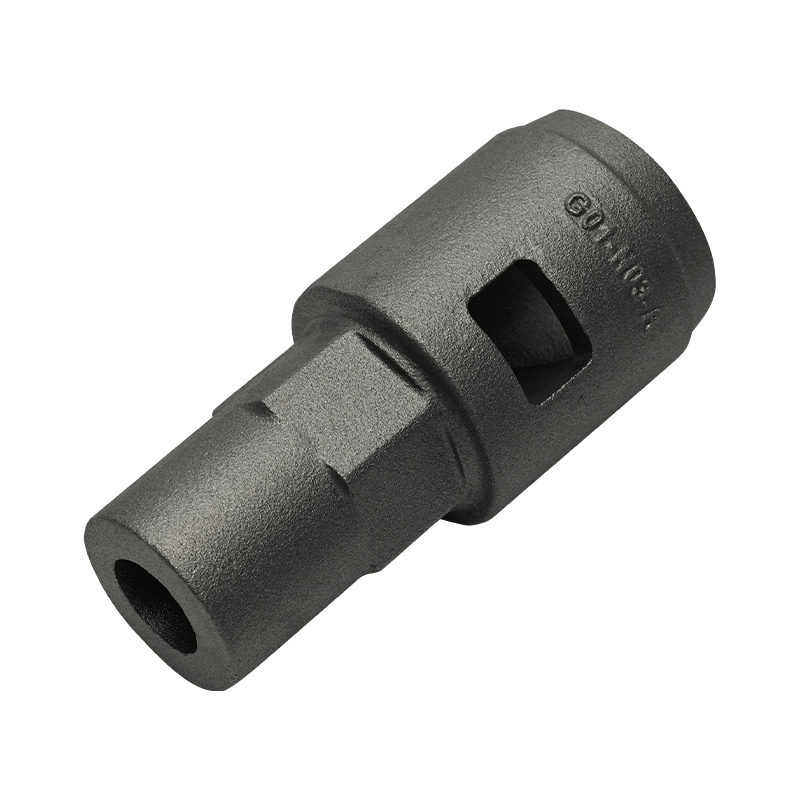 Ductile Cast Iron Automotive PartsCalipers, brackets, and housings cast in ductile iron deliver the fatigue strength and impact resistance needed for braking, suspension, and drivetrain components exposed to road shock and corrosion.View Product →
Valves, pumps, and pressure equipment
Pressure retention is where ductile iron quietly does its most important work. Valve bodies and bonnets tolerate pressure spikes because the material deforms rather than shatters, and the same margin protects casings and brackets across industrial and HVAC service.
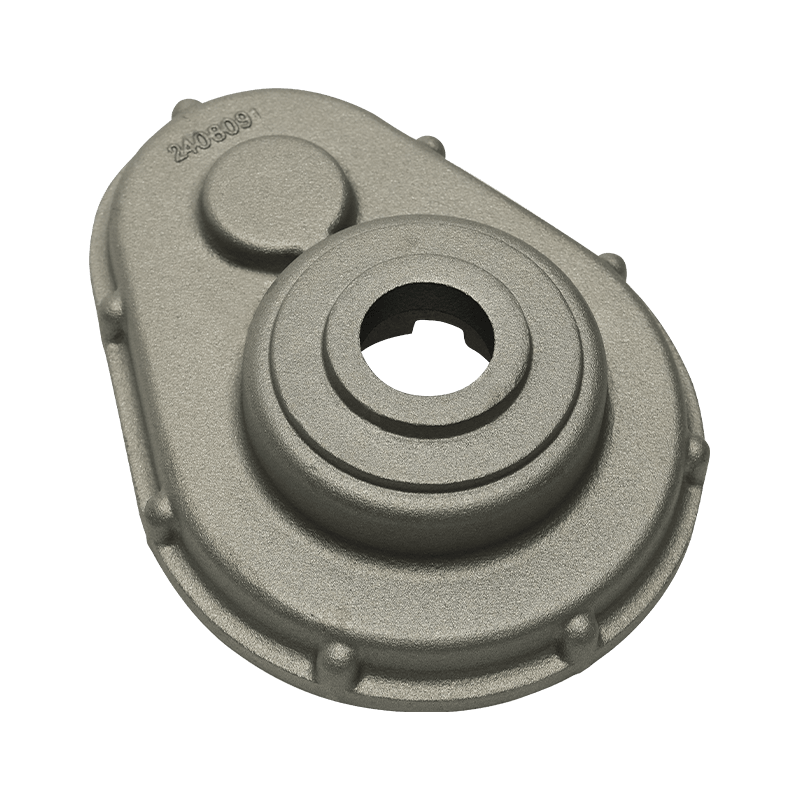 Ductile Cast Iron Valve AccessoriesValve bodies and bonnets in ductile iron retain their integrity under pressure spikes, combining strength, toughness, and corrosion resistance for demanding industrial and HVAC service.View Product →
Water pump accessories benefit from the same profile. A housing cast in ductile iron supports complex internal passages, carries shaft loads, and survives pressure cycling that would crack a flake-graphite casting, which is why it has become the default housing material for many pumping systems.
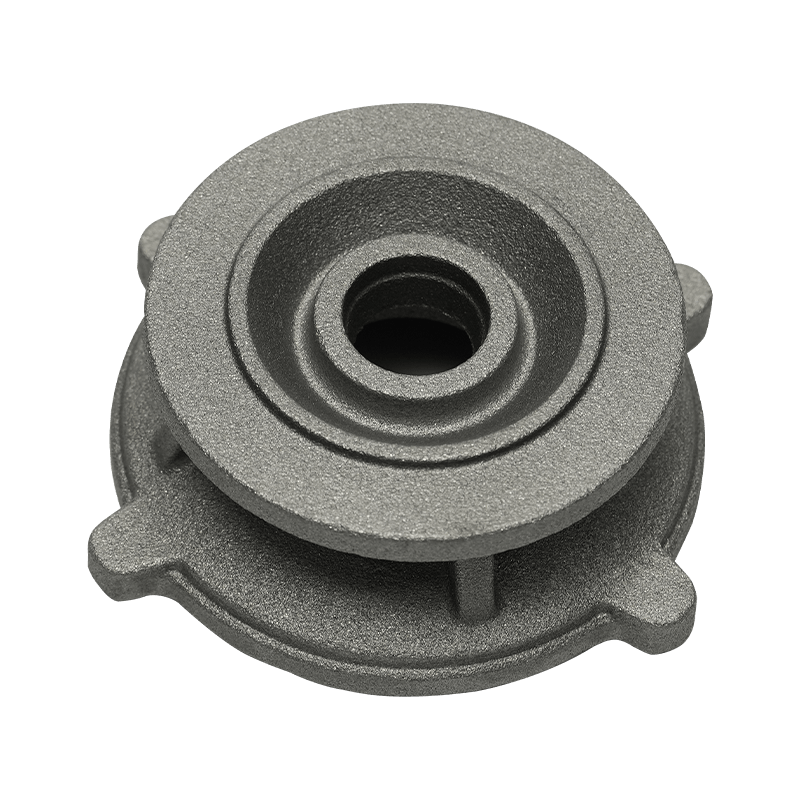 Ductile Cast Iron Water Pump AccessoriesDuctile iron pump housings support complex internal passages and shaft loads while withstanding pressure cycling, making them a reliable choice for municipal and industrial water systems.View Product →
Pipe fittings and fluid infrastructure
Ductile iron pipe fittings carry municipal water mains, irrigation networks, and fire-protection systems. Grooved, flanged, and threaded fittings in this material tolerate ground movement, water hammer, and decades of buried service, which is exactly what gray iron could not guarantee and why pipe fitting standards migrated to ductile iron.
Robotics and precision equipment
Industrial robot bases, semiconductor equipment structures, and heavy machine frames use ductile iron where mass, rigidity, and vibration behavior must be balanced. The material damps vibration better than steel weldments while offering more toughness than gray iron, a practical middle ground for equipment that runs continuously.
Ductile or Gray Iron: Making the Call
The decision usually comes down to how the part is loaded and what it costs to be wrong. Gray iron remains a sound choice for static, compression-loaded parts where damping and machinability matter more than toughness. Ductile iron becomes the safer specification the moment tension, impact, or pressure enters the picture.
- Choose gray iron for machine beds and columns, low-pressure housings, and counterweights, where cost and vibration damping dominate.
- Choose ductile iron for brake and drivetrain parts, valve and pump pressure bodies, pipe fittings, and any component where brittle fracture would create a safety or downtime event.
There is also a middle path worth noting: many sourcing teams specify ductile iron across an entire component family to simplify qualification, accepting a small material premium in exchange for one material system, one testing regime, and fewer failure modes. Buyers who want to see how a dedicated ductile iron line is organized can review the ductile cast iron component categories to understand how parts are grouped by industry and function.
What to Verify Before Placing an Order
Most ductile iron sourcing problems trace back to information that was never requested up front. Before awarding a casting contract, a short checklist keeps buyer and foundry aligned:
- A material certificate tied to a specific grade, with melt chemistry from spectrometer analysis attached rather than summarized.
- Metallographic evidence of nodularity, typically 90% or better, plus nodule count, because grade numbers mean little if graphite shape is inconsistent.
- Heat treatment records whenever the specified grade depends on annealing or normalizing to reach its elongation target.
- As-cast dimensional capability against ISO 8062 tolerance grades, and a clear list of which surfaces are machined to final size.
- Proof pressure or leak testing for any valve, pump, or fitting body, agreed as a lot-by-lot or sampling requirement.
For buyers working from their own drawings, an ODM or OEM arrangement adds two questions: wall-thickness consistency across the casting, since ductile iron properties vary somewhat with section size, and the machining allowance the foundry will hold. A supplier that answers both with process data rather than assurances is generally the safer long-term partner.
The bottom line: ductile cast iron is the material to specify when a casting must combine complex geometry with steel-grade strength, predictable yield behavior, and resistance to impact and pressure. Read the grade correctly, confirm nodularity and heat treatment rather than trusting grade names alone, and match the material to the actual load case. Do those three things, and ductile iron delivers gray-iron economics with performance that holds up in the field.