

 English
 русский
 Deutsch
Content
- 1 What Is Ductile Cast Iron?
- 2 How Ductile Cast Iron Differs from Gray Iron at the Microstructural Level
- 3 Key Mechanical Properties of Ductile Cast Iron
- 4 Ductile Cast Iron Grades and Standards
- 5 Austempered Ductile Iron: The High-Performance Variant
- 6 Ductile Cast Iron vs. Gray Iron vs. Steel: A Direct Comparison
- 7 How Ductile Cast Iron Is Made: The Production Process
- 8 Where Ductile Cast Iron Is Used: Major Applications by Industry
- 9 Limitations and Considerations When Using Ductile Cast Iron
- 10 Machinability and Finishing of Ductile Cast Iron
What Is Ductile Cast Iron?
Ductile cast iron—also called nodular cast iron or spheroidal graphite (SG) iron—is a type of cast iron in which the graphite is present as spherical nodules rather than flakes. This structural difference is what gives ductile cast iron its defining characteristic: the ability to deform plastically before fracturing, rather than breaking suddenly like conventional gray iron.
The short answer to "what is ductile cast iron" is this: it is a high-strength, impact-resistant ferrous casting material that combines the castability and machinability of cast iron with mechanical properties approaching those of steel. Tensile strengths range from 414 MPa to over 900 MPa depending on grade, and elongation values of 2 to 18 percent are achievable—numbers that gray iron, with near-zero elongation, cannot approach.
Ductile cast iron was developed in 1943 by Keith Millis at the International Nickel Company, who discovered that adding small amounts of magnesium to molten iron caused the graphite to solidify in a spherical form. Commercial production began in the late 1940s, and ductile iron is now one of the most widely produced engineering materials in the world, with global output exceeding 25 million tonnes annually.
How Ductile Cast Iron Differs from Gray Iron at the Microstructural Level
The key to understanding ductile cast iron lies in its microstructure. In gray cast iron, graphite forms as interconnected flakes throughout the metal matrix. These flakes act as pre-existing cracks—under stress, fracture initiates at the flake tips and propagates rapidly, causing brittle failure with virtually no plastic deformation.
In ductile cast iron, the addition of 0.03 to 0.05 percent magnesium by weight to the molten iron (a process called nodulizing or magnesium treatment) causes the graphite to solidify as discrete spheres—nodules—rather than flakes. Each nodule is a discontinuous graphite particle with no sharp tips to initiate cracking. The iron matrix between nodules can deform plastically under stress before any crack can propagate, giving the material its ductility.
The matrix surrounding the graphite nodules can be ferritic, pearlitic, or a combination of both, and this matrix composition is what primarily determines the mechanical properties of any given ductile iron grade. Heat treatment can convert the matrix from pearlitic to ferritic (annealing) or produce austempered microstructures for maximum strength.
Key Mechanical Properties of Ductile Cast Iron
The mechanical properties of ductile cast iron are what set it apart from every other grade of cast iron and make it a genuine engineering alternative to steel in many applications. The following properties apply to standard grades per ASTM A536:
- Tensile strength: 414 MPa (60,000 psi) for Grade 60-40-18 up to 827 MPa (120,000 psi) for Grade 120-90-02. Austempered ductile iron (ADI) achieves tensile strengths exceeding 1,400 MPa.
- Yield strength: 276 MPa to 621 MPa (40,000 to 90,000 psi) across standard grades, with ADI reaching over 1,100 MPa.
- Elongation: 2 to 18 percent at fracture, depending on grade. Grade 60-40-18 offers 18 percent elongation—a level associated with highly ductile metals.
- Hardness: 140 to 300 Brinell hardness number (BHN) for standard grades; ADI grades reach 269 to 477 BHN depending on austempering temperature.
- Impact resistance: Significantly higher than gray iron. Charpy impact values of 7 to 100 J are achievable depending on grade and temperature, versus near-zero for gray iron.
- Fatigue strength: Approximately 45 to 49 percent of tensile strength in rotating bending fatigue—comparable to many medium-carbon steels.
- Elastic modulus: 159 to 172 GPa—lower than steel (200 GPa) but significantly higher than aluminum (69 GPa), providing good stiffness-to-weight behavior in thick-section castings.
Ductile Cast Iron Grades and Standards
Ductile cast iron is produced in multiple grades defined by tensile strength, yield strength, and minimum elongation. The naming convention in ASTM A536 directly encodes these properties: Grade 65-45-12 means 65,000 psi minimum tensile strength, 45,000 psi minimum yield strength, and 12 percent minimum elongation.
| ASTM A536 Grade | Min. Tensile Strength | Min. Yield Strength | Min. Elongation | Matrix | Typical Use |
|---|---|---|---|---|---|
| 60-40-18 | 414 MPa (60 ksi) | 276 MPa (40 ksi) | 18% | Fully ferritic | High-ductility applications, pressure vessels |
| 65-45-12 | 448 MPa (65 ksi) | 310 MPa (45 ksi) | 12% | Ferritic-pearlitic | General engineering, pipe fittings |
| 80-55-06 | 552 MPa (80 ksi) | 379 MPa (55 ksi) | 6% | Pearlitic | Automotive, machinery components |
| 100-70-03 | 689 MPa (100 ksi) | 483 MPa (70 ksi) | 3% | Pearlitic / normalized | High-strength structural parts, crankshafts |
| 120-90-02 | 827 MPa (120 ksi) | 621 MPa (90 ksi) | 2% | Martensitic / quenched | High-wear, high-load components |
Internationally, ductile cast iron grades are defined under ISO 1083 (e.g., EN-GJS-400-18, EN-GJS-500-7, EN-GJS-700-2) and the European EN 1563 standard. The naming convention differs but the property ranges are closely comparable to ASTM A536 grades.
Austempered Ductile Iron: The High-Performance Variant
Austempered ductile iron (ADI) is produced by subjecting standard ductile iron to a specialized heat treatment cycle: austenitizing at 850°C to 950°C, followed by isothermal quenching in a salt bath at 230°C to 400°C. This produces an ausferrite microstructure—a mixture of acicular ferrite and carbon-stabilized austenite—that delivers extraordinary combinations of strength, ductility, and toughness.
ADI grades per ASTM A897 achieve tensile strengths of 900 to 1,400 MPa with elongation values of 1 to 10 percent—properties that overlap with medium-alloy steel, but at a 10 percent lower density and significantly lower cost when produced in complex geometries that would require extensive machining from bar stock. ADI is used in gears, crankshafts, track links, and structural agricultural components where the performance-to-cost ratio is decisive.
Ductile Cast Iron vs. Gray Iron vs. Steel: A Direct Comparison
Understanding where ductile cast iron sits relative to gray iron and steel helps engineers make the right material selection decision. Each material has a defined performance envelope and cost profile.
| Property | Gray Iron | Ductile Cast Iron | Carbon Steel (AISI 1040) |
|---|---|---|---|
| Tensile Strength | 100–400 MPa | 414–900+ MPa | 590–750 MPa |
| Yield Strength | N/A (brittle) | 276–621 MPa | 374–490 MPa |
| Elongation | <1% | 2–18% | 18–25% |
| Impact Resistance | Very low | Moderate to high | High |
| Vibration Damping | Excellent | Good | Poor |
| Castability | Excellent | Very good | Moderate |
| Machinability | Excellent | Good | Good |
| Relative Cost (casting) | Low | Low–Moderate | Moderate–High |
The table illustrates why ductile cast iron occupies such a dominant position in engineering: it delivers strength and ductility approaching steel, retains the damping capacity and castability advantages of cast iron, and costs significantly less per kilogram of finished component than steel casting when complex geometries are involved.
How Ductile Cast Iron Is Made: The Production Process
Producing ductile cast iron requires tighter process control than gray iron. The magnesium treatment step is the most critical and technically demanding part of the process.
- Base iron preparation: The base molten iron is prepared with a controlled composition—typically 3.6 to 3.8 percent carbon and 2.0 to 2.8 percent silicon by weight. Sulfur content must be reduced to below 0.02 percent before magnesium treatment, as sulfur reacts with and consumes magnesium, preventing nodule formation.
- Magnesium treatment (nodulizing): Magnesium is added to the molten iron—typically as a magnesium-ferrosilicon alloy (FeSiMg) to moderate the violent reaction. The treatment is performed in a ladle using the sandwich, plunging, or wire injection method. The residual magnesium content in the treated iron must be 0.03 to 0.05 percent—too little results in incomplete nodularization; too much causes carbide formation.
- Inoculation: Immediately after magnesium treatment, ferrosilicon inoculant is added to promote graphite nucleation and prevent carbide formation during solidification. Inoculation must occur within a short window—typically within 10 to 15 minutes—to remain effective before fading.
- Casting: The treated iron is poured into sand molds, permanent molds, or centrifugal casting equipment depending on the part geometry. Ductile iron's slightly higher shrinkage rate compared to gray iron requires careful riser design to prevent internal porosity.
- Heat treatment (optional): As-cast ductile iron may be annealed to fully ferritize the matrix (improving ductility), normalized to develop a pearlitic matrix (increasing strength), or austempered to produce ADI grades.
- Quality verification: Nodularity (the percentage of graphite present as spheres versus irregular forms) is verified metallographically. Nodularity above 85 percent is required for most structural applications; below 80 percent, mechanical properties fall significantly short of grade requirements.
Where Ductile Cast Iron Is Used: Major Applications by Industry
Ductile cast iron's combination of strength, ductility, castability, and cost makes it the default material choice across a remarkably wide range of industries. It is not a niche material—it is a workhorse.
Automotive and Transportation
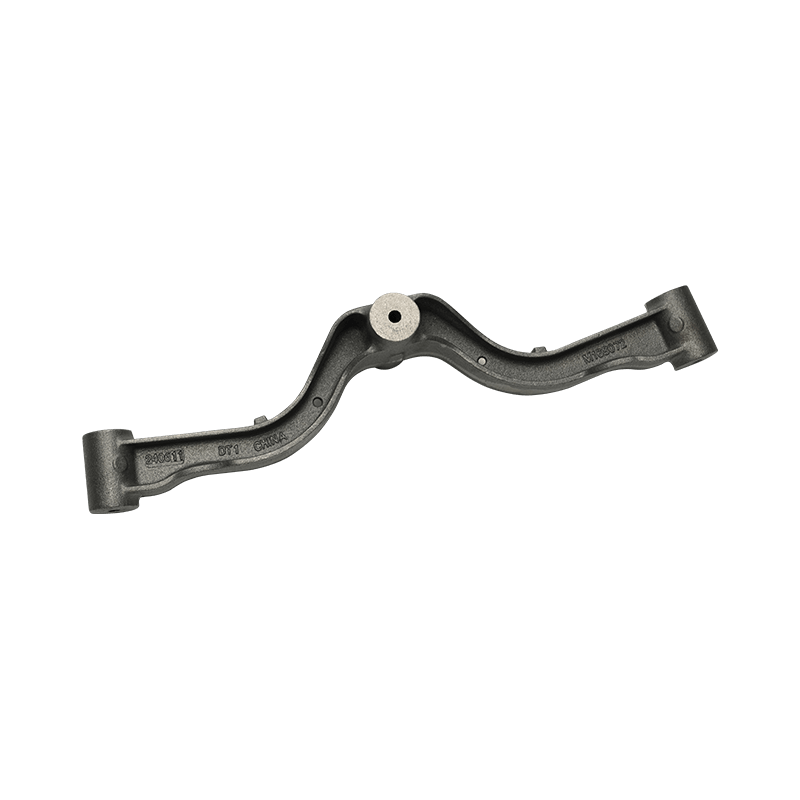
Automotive applications consume the largest share of global ductile iron production. Key components include crankshafts, camshafts, differential housings, steering knuckles, suspension control arms, and brake calipers. A typical passenger vehicle contains 30 to 60 kg of ductile cast iron. The material's fatigue strength and machinability make it ideal for rotating and reciprocating powertrain parts that would otherwise require costly steel forgings.
Water and Wastewater Infrastructure
Ductile iron pipe has largely replaced gray iron and concrete pipe in water distribution and sewage systems worldwide. The combination of high tensile strength, flexibility under ground movement, corrosion resistance (especially with cement lining), and long service life—50 to 100+ years expected—makes it the material of choice for municipal water mains, pressure pipes, and fittings. AWWA C151/A21.51 governs ductile iron pipe specifications in North America.
Agricultural and Construction Equipment
Tractor axle housings, hydraulic cylinder bodies, gearbox casings, and implement hitch components are routinely cast in ductile iron. The material withstands the shock loading from rough terrain and field operations that would cause gray iron to crack, while offering better machinability and lower cost than equivalent steel castings.
Oil, Gas, and Valves
Gate valves, globe valves, check valves, and valve bodies for industrial pipelines are commonly cast in Grade 65-45-12 or 80-55-06 ductile iron. The material's pressure-containing capability, machinability for precision seating surfaces, and corrosion resistance make it preferable to gray iron for any application where valve body rupture would be a safety event.
Wind Energy
Large-format ductile iron castings are critical structural components in wind turbines. Hub castings for multi-megawatt turbines can weigh 10 to 30 tonnes, with nacelle frames, main bearing housings, and rotor lock castings also produced in ductile iron. The combination of high strength, fatigue resistance, and the ability to cast complex hollow geometries in large section thicknesses makes ductile iron irreplaceable in this application.
Limitations and Considerations When Using Ductile Cast Iron
Ductile cast iron is not a universal solution. Understanding its limitations prevents costly design errors and material misapplications.
- Section sensitivity: Mechanical properties degrade in very thick cross-sections (above 75 to 100 mm) where the slow cooling rate at the center reduces nodularity and promotes pearlite or carbide formation. Large castings require careful alloy adjustment and may need heat treatment to achieve uniform properties throughout.
- Lower ductility at low temperatures: Unlike steel, ductile iron does not maintain its Charpy impact values at sub-zero temperatures. Below approximately -20°C, standard ferritic ductile iron undergoes a ductile-to-brittle transition. Low-temperature applications require special low-silicon or nickel-alloyed grades.
- Welding is difficult: Ductile cast iron is weldable but requires careful preheat (typically 250°C to 400°C), appropriate filler metals (nickel-base or high-nickel electrodes), and controlled post-weld cooling to prevent cracking. Welding is a repair technique, not a joining method, for most ductile iron components.
- Corrosion resistance is moderate: Ductile iron corrodes in aggressive environments—particularly chloride-rich soils and acidic conditions. Protective coatings (cement lining, epoxy, zinc) are standard for buried infrastructure applications. Unprotected ductile iron should not be used in immersed or buried service without corrosion mitigation.
- Density is higher than aluminum: At 7.1 g/cm³—compared to aluminum's 2.7 g/cm³—ductile iron is heavier. For weight-critical applications where ductile iron's strength advantages are not required, aluminum or magnesium castings may be more appropriate.
Machinability and Finishing of Ductile Cast Iron
Ductile cast iron machines well compared to steel, though it is somewhat more abrasive than gray iron due to the compact graphite nodules. The graphite in gray iron provides a built-in lubricant effect that marginally reduces tool wear; ductile iron's spheroidal graphite does not offer the same benefit.
- Cutting speeds: Ferritic grades (60-40-18, 65-45-12) machine at cutting speeds of 150 to 250 m/min with carbide tooling. Pearlitic grades (80-55-06, 100-70-03) require reduced speeds of 100 to 180 m/min due to higher hardness.
- Surface finish: Ductile iron can be machined to surface finishes of Ra 0.8 to 1.6 μm with standard carbide tooling—suitable for most sealing and bearing surfaces without grinding.
- Coating and surface treatment: Ductile iron accepts electroplating, phosphating, painting, powder coating, and thermal spray coatings well. Flame hardening and induction hardening of pearlitic grades can achieve surface hardnesses of 50 to 58 HRC for wear-critical surfaces such as camshaft lobes and crankshaft journals.