

 English
 русский
 Deutsch
Content
In the world of metalworking and heavy machinery, few materials have stood the test of time as effectively as Grey Cast Iron. Named for the distinctive grey, dull color of its fracture surfaces, this material has been the backbone of industrial progress for centuries.
Even in an age of high-tech composites and exotic alloys, Grey Cast Iron remains the most widely used casting material globally. But what exactly makes this "old-school" metal so indispensable to modern engineering? In this detailed exploration, we will uncover the unique science, practical benefits, and diverse applications of Grey Cast Iron.
What is Grey Cast Iron?
Grey Cast Iron is a type of cast iron characterized by a microstructure that contains flake graphite. It typically consists of iron, 2.5% to 4.0% carbon, and 1.0% to 3.0% silicon.
The Secret in the Flakes
The defining feature of Grey Iron is the shape of its graphite. Unlike Ductile Iron, where graphite forms spheres, in Grey Iron, it crystallizes into long, thin flakes. When the metal is fractured, it breaks along these graphite flakes, exposing the grey color that gives the material its name.
This flake structure is not just a visual curiosity; it fundamentally dictates how the metal behaves under stress, heat, and vibration. While these flakes make the material more "brittle" than steel, they also provide a set of physical advantages that no other metal can easily replicate.
Key Mechanical and Physical Properties
Engineers don't choose Grey Cast Iron because it is "the strongest" metal—they choose it because it possesses a unique combination of properties that make it perfect for specific, demanding environments.
Excellent Vibration Damping
This is perhaps the most famous quality of Grey Cast Iron. The graphite flakes act like tiny internal shock absorbers. When a machine creates energy or vibration, the flake structure dissipates that energy much more effectively than steel or ductile iron. This is why almost every massive machine tool bed and engine block in the world is made of Grey Iron—it keeps the system stable and quiet.
High Thermal Conductivity and Heat Retention
Grey Cast Iron is a champion of heat management. The graphite flakes provide a continuous path for thermal energy to move through the metal. This makes it ideal for parts that experience "thermal cycling"—heating up and cooling down repeatedly—such as brake rotors and engine components. It distributes heat evenly, preventing "hot spots" that could cause warping or cracking.
Exceptional Compressive Strength
While Grey Iron is relatively weak when being pulled (tensile strength), it is incredibly strong when being squeezed (compressive strength). In many cases, its ability to withstand crushing force is three to four times higher than its tensile strength, making it perfect for columns, pedestals, and heavy load-bearing frames.
Superior Machinability
Because the graphite flakes act as a natural lubricant and help the metal chips break off easily during cutting, Grey Cast Iron is one of the easiest metals to machine. This reduces tool wear and speeds up the manufacturing process, leading to lower production costs for complex parts.
The Manufacturing Process: Precision in the Foundry
Creating high-quality Grey Cast Iron requires a delicate balance of chemistry and temperature control.
Melting and Alloying
The process begins by melting a mixture of pig iron, steel scrap, and internal foundry returns. During the melting stage, elements like silicon are carefully adjusted. Silicon is crucial because it promotes "graphitization"—the process that ensures the carbon turns into flakes rather than hard, brittle iron carbides.
The Pouring Stage
Once the molten iron reaches the correct temperature (usually around 1150℃ to 1300℃), it is poured into molds. Most Grey Iron is produced using Sand Casting, which allows for the creation of massive, complex shapes that would be impossible to forge or machine from a solid block.
Controlled Cooling
The speed at which the casting cools is vital. If it cools too quickly, the carbon doesn't have time to form flakes, and the iron becomes "white iron," which is too hard to machine. Foundries use specialized insulating sands or cooling cycles to ensure the internal structure is uniform throughout the part.
Comparing the "Irons": Grey vs. Ductile
A common question in the industry is: Which is better—Grey or Ductile?The answer depends entirely on the application.
| Feature | Grey Cast Iron | Ductile Cast Iron |
| Graphite Shape | Flakes | Spheres (Nodules) |
| Tensile Strength | Lower (20k–60k psi) | Higher (60k–120k psi) |
| Damping Capacity | Exceptional (The Best) | Moderate |
| Machinability | Excellent | Good |
| Impact Resistance | Low (Brittle) | High (Tough) |
| Primary Use | Stability, Heat, Compression | Strength, Tension, Impact |
In short: If the part needs to be squeezed, stay cool, and remain perfectly still, use Grey Iron. If the part needs to be pulled, twisted, or survive a heavy impact, use Ductile Iron.
Major Industrial Applications
Where will you find Grey Cast Iron today? Almost everywhere you look in the industrial and consumer sectors.
Automotive and Transportation
-
Engine Blocks and Cylinder Heads: The stability and heat dissipation of Grey Iron are vital for the internal combustion process.
-
Brake Drums and Rotors: The material's ability to handle friction-induced heat without vibrating uncontrollably makes it the standard for braking systems.
Machine Tools and Manufacturing
-
Machine Bases: The beds of CNC machines, lathes, and milling machines are almost exclusively Grey Iron. Without its damping properties, the vibration from the cutting tools would ruin the precision of the finished parts.
-
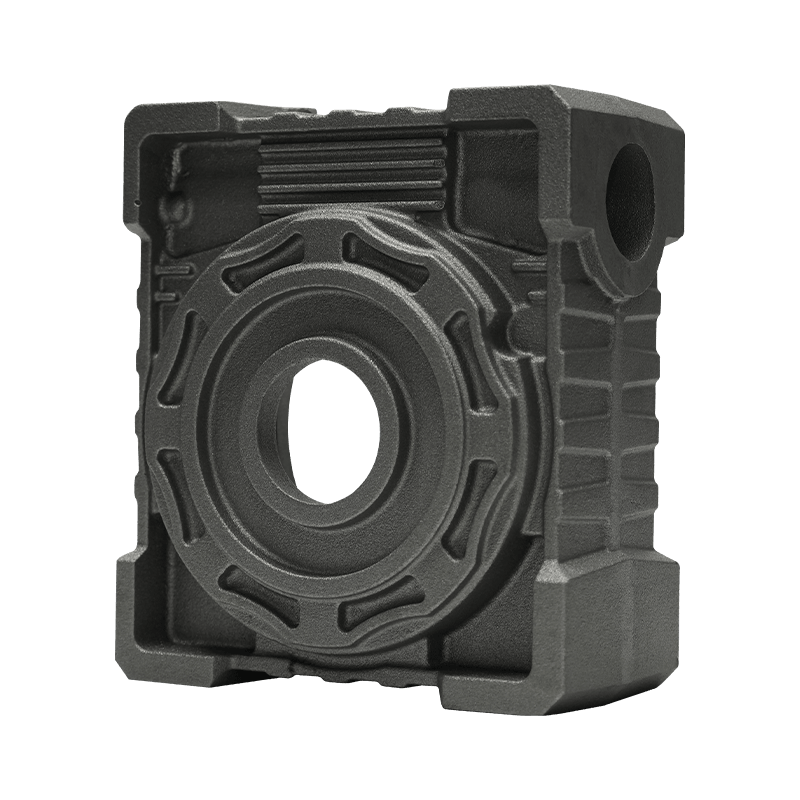
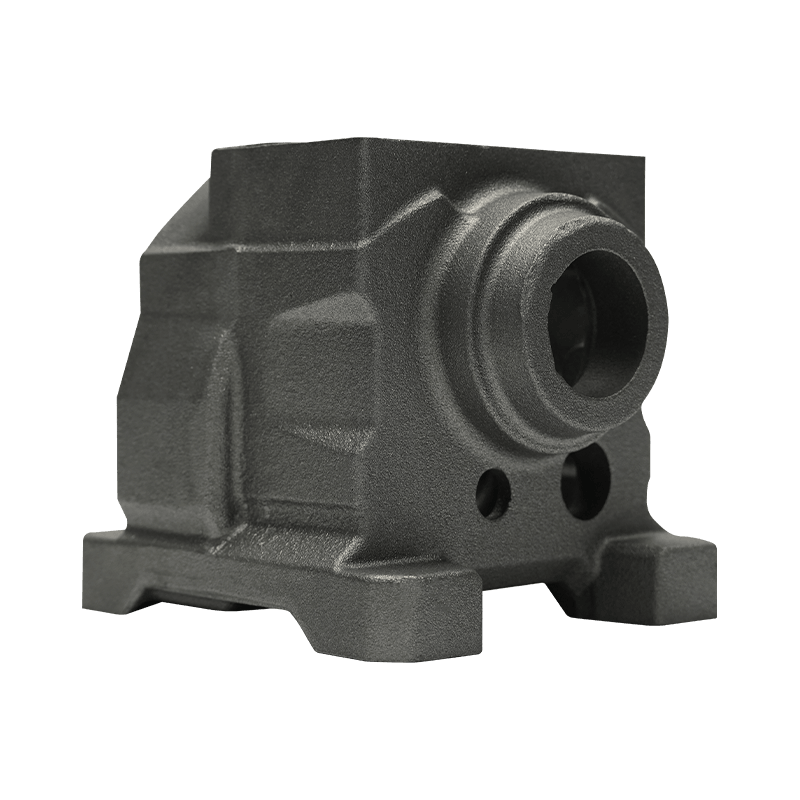
Housing and Enclosures: Gearboxes and pump housings often use Grey Iron because it is rigid and protects the internal components from external noise and vibration.
Construction and Municipal
-
Manhole Covers and Grates: These parts require high compressive strength to withstand the weight of heavy trucks and have been made of Grey Iron for over a century due to its cost-effectiveness.
-
Pipes and Fittings: While Ductile Iron is preferred for high-pressure water lines, Grey Iron is still used in many drainage and soil pipe systems.
Consumer Goods
-
Cookware: The famous "cast iron skillet" is typically made of Grey Iron. Its high thermal mass and ability to hold heat evenly make it a favorite for chefs worldwide.
Modern Market Trends (2025-2026)
As we look toward 2026, the Grey Cast Iron industry is evolving. While it is a traditional material, it is being modernized by new technologies:
- High-Grade Thin-Walled Castings: Modern foundries are now able to cast Grey Iron in much thinner sections than before. This allows for lighter parts in the automotive sector without sacrificing the damping or thermal properties of the iron.
- Sustainability and Recycling: Grey Cast Iron is a hero of the circular economy. Over 90% of the material used in many foundries is recycled scrap. Furthermore, the energy required to melt iron is lower than that required for many other high-performance alloys.
- Simulation Software: Advanced computer modeling allows engineers to predict how the molten iron will flow and cool inside a mold. This reduces waste and ensures that every casting meets strict quality standards the first time.
Is Grey Cast Iron Right for Your Project?
Choosing the right material is a balance of cost, performance, and longevity. Grey Cast Iron is often the best choice when:
- Your project requires high stability and noise reduction.
- You are dealing with parts that will get very hot and need to cool down evenly.
- You need a complex shape that would be too expensive to machine from steel.
- The primary stress on the part will be compressive (pushing) rather than tensile (pulling).
Conclusion
Grey Cast Iron is far from a "relic of the past." It is a sophisticated engineering material that solves problems other metals cannot. Its ability to absorb vibration, manage heat, and withstand immense pressure—all while remaining cost-effective—guarantees its place in the foundries of the future.
Whether you are designing a high-precision machine or a heavy-duty industrial pump, understanding the unique flake-graphite structure of Grey Iron is the key to creating a product that is both reliable and efficient.