

 English
 русский
 Deutsch
Content
A brake caliper that distorts under repeated hard stops, a steering knuckle that fatigues after years of pothole impacts, a differential carrier that cracks under torque — these failures are usually decided at the casting stage, not on the assembly line. For automotive parts exposed to cyclic loads, impact, and sustained stress, ductile cast iron is the default engineering answer: minimum tensile strength from roughly 400 to 900 MPa, real elongation, and a casting cost well below steel forgings. This article explains which parts rely on ductile iron, which grades are typically specified, where grey iron still wins, and what buyers should verify before awarding a casting contract.
What Makes Ductile Iron Different From Grey Cast Iron
Ductile iron, also called spheroidal graphite or nodular cast iron, is made by treating molten iron with magnesium so the graphite solidifies as rounded nodules instead of sharp flakes. Both materials normally contain more than 3 percent carbon, but the shape of that graphite decides everything. In grey iron, each flake behaves like an internal crack, so the metal fractures with almost no warning and shows essentially zero elongation. In ductile iron, the nodules let the metal matrix stretch and distribute load before failure.
The practical result is a strength profile grey iron cannot match: minimum tensile strength from 400 to 900 MPa depending on grade, yield strength between about 250 and 600 MPa, and elongation of 12 percent or more in ferritic grades. Standards such as ASTM A536, ISO 1083, and EN 1563 define these grades, and automotive engineers usually write one of them directly onto the drawing. For a deeper look at long-term behavior, our article on whether ductile cast iron automotive parts resist wear, fatigue, and corrosion covers those failure modes in detail.
Where Ductile Cast Iron Automotive Parts Are Used
Brake and Chassis Components
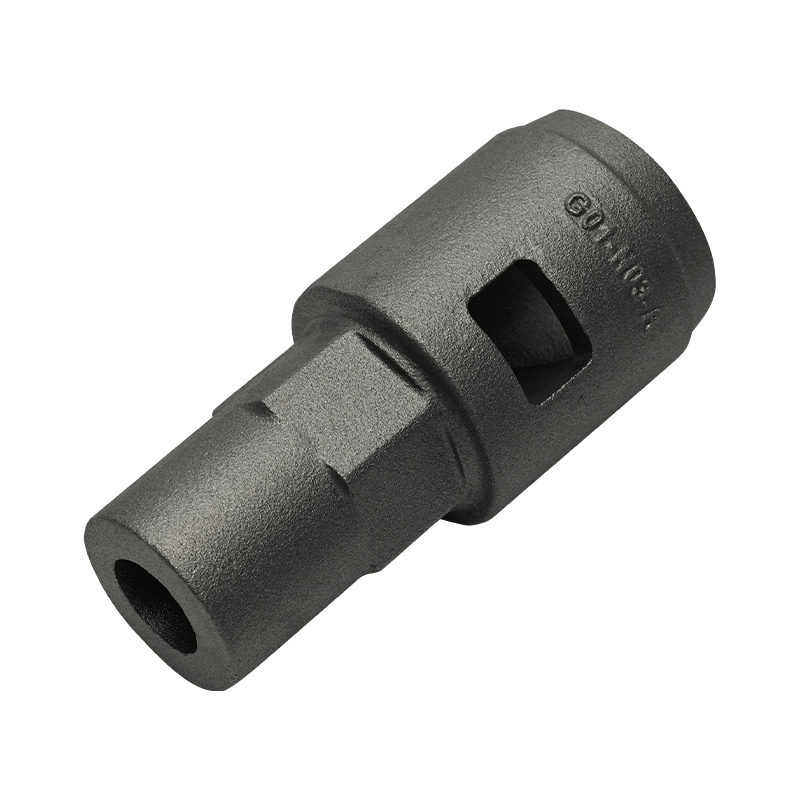
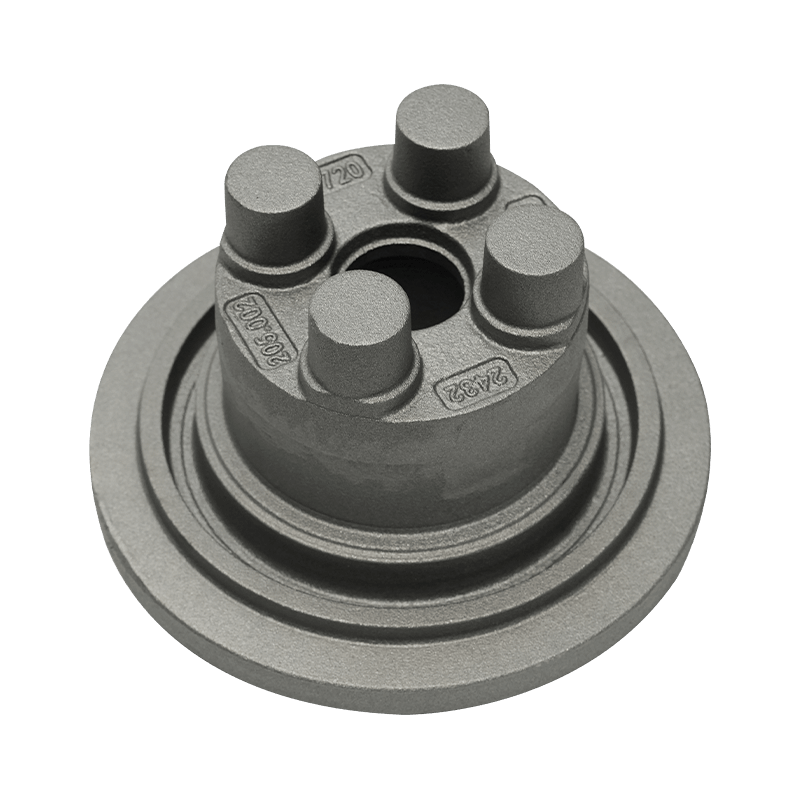
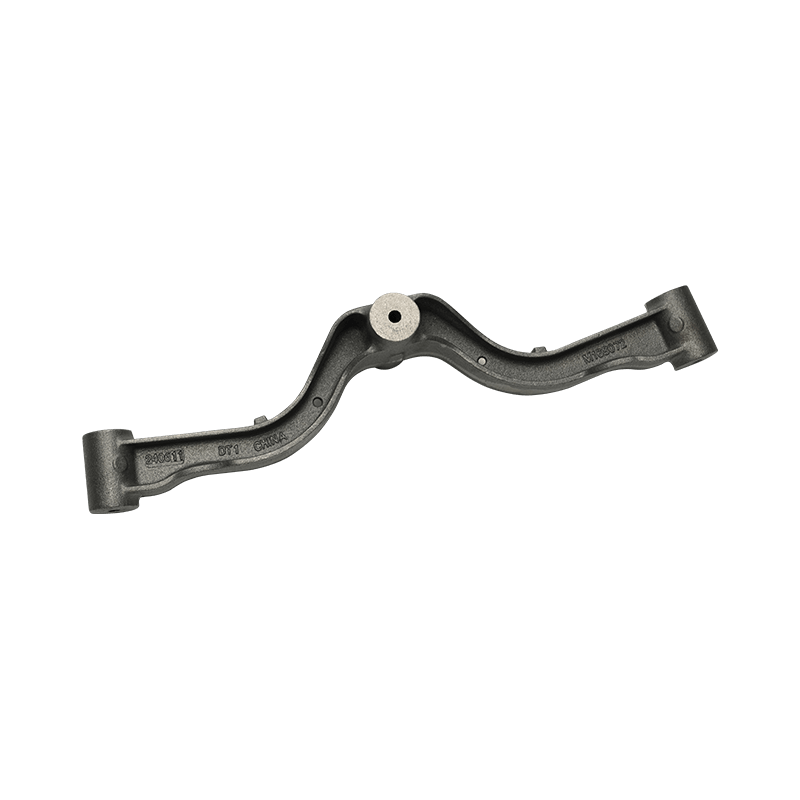
Brake caliper bodies are the classic example: the caliper must hold clamping force, shrug off road salt and splash, and survive thermal shock without cracking, which rules out flake graphite materials. Steering knuckles, wheel hubs, control arms, spring brackets, and axle housings follow the same logic, because each of them takes bending and impact loads that would turn a grey iron flake into a crack starter. In high-stress brake applications in particular, ductile iron's behavior under repeated emergency stops is what keeps the component stable where a brittle material would fatigue.
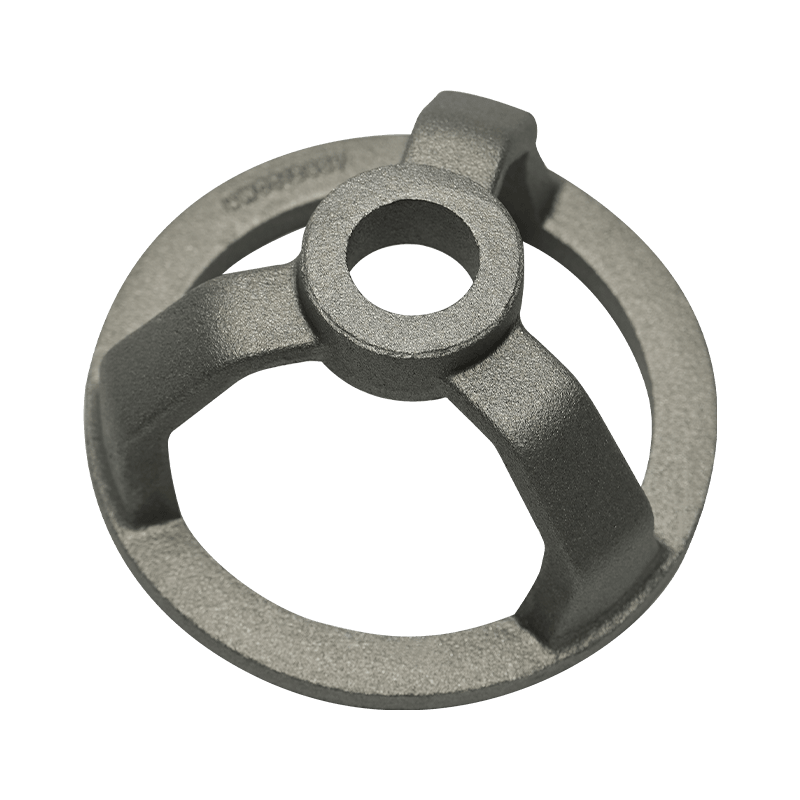
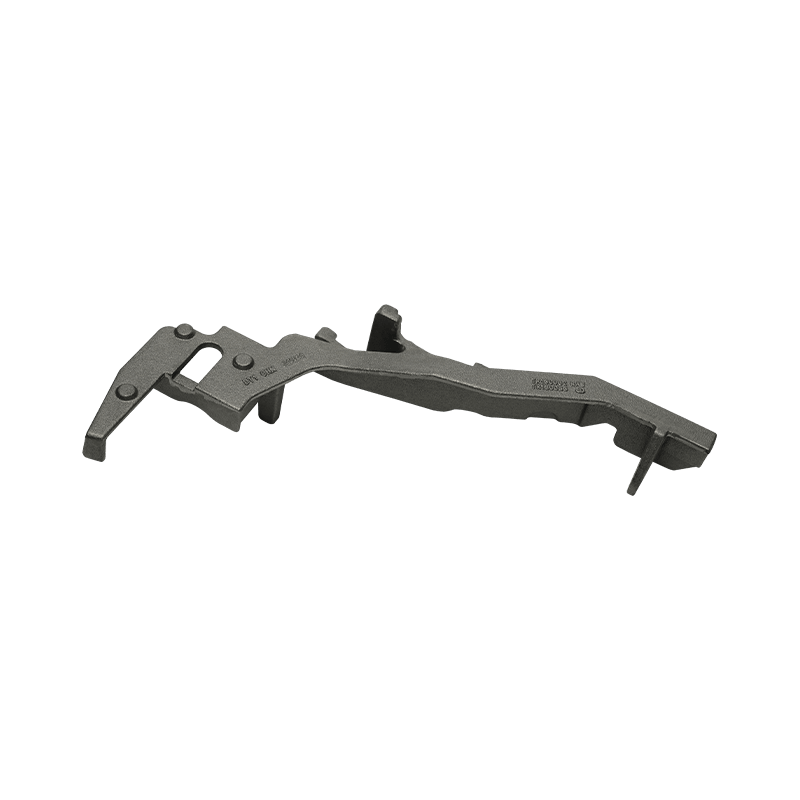
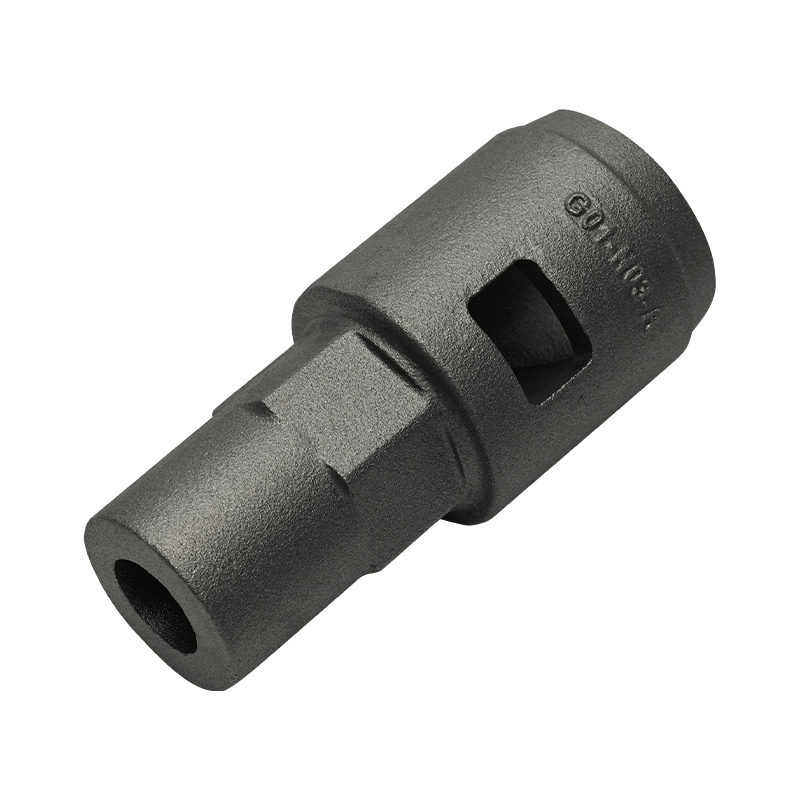 Ductile Cast Iron Automotive Safety PartsDuctile iron calipers, brackets, and support arms resist impact and thermal shock where flake graphite would crack. This foundry makes such brake and suspension castings, relevant to the high-stress applications just discussed.View Product →
Powertrain and Thermal Components
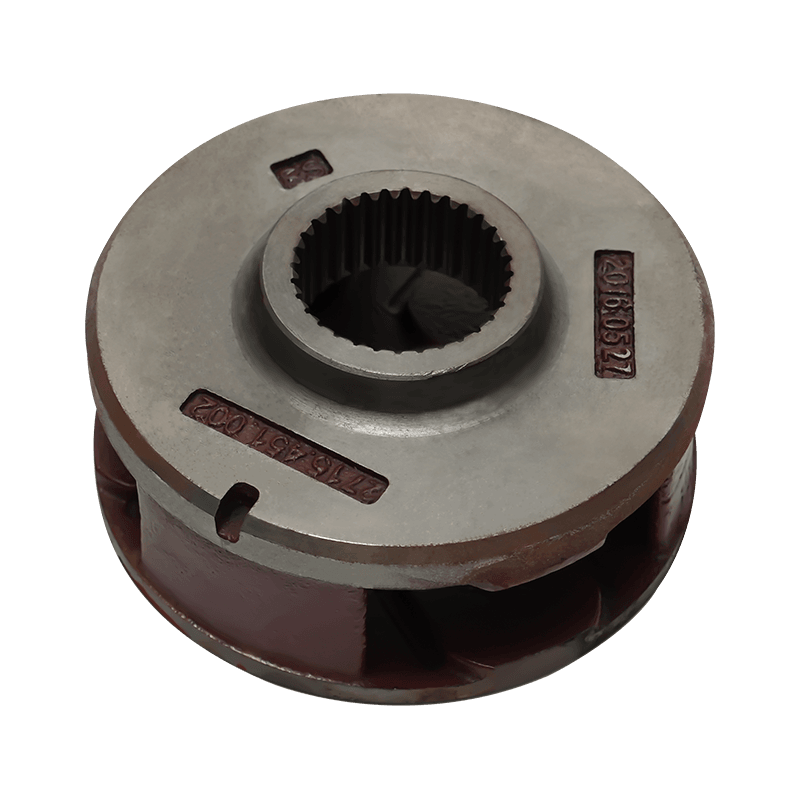
Under the hood, pearlitic ductile iron and austempered ductile iron (ADI) serve as crankshaft material, main bearing caps — frequently cast as a single cluster and separated during machining — timing gears, and flywheel housings. Exhaust manifolds and turbocharger housings call for silicon-molybdenum ductile grades that keep their structure at sustained temperatures near 700 °C and above, which is why many integrated exhaust manifolds on modern engines are still cast in iron rather than aluminum.
Grades are chosen by matching required strength, ductility, and wear behavior to each part. The most common selections look like this:
| Grade (ASTM A536) | Min. tensile strength | Min. yield strength | Min. elongation | Typical automotive parts |
|---|---|---|---|---|
| 65-45-12 | 450 MPa | 310 MPa | 12% | Suspension arms, steering knuckles, brackets |
| 80-55-06 | 550 MPa | 380 MPa | 6% | Brake calipers, wheel hubs, differential carriers |
| 100-70-03 | 700 MPa | 480 MPa | 3% | Crankshafts, gears, high-strength linkages |
| ADI (ASTM A897) | 900-1,600 MPa | 650-1,300 MPa | 1-9% | Hardened gears, crankshafts, severe-wear parts |
Choosing Between Ductile and Grey Iron in the Same Vehicle
Neither material is disappearing from cars; the real question is where each one earns its place. Grey cast iron keeps the win wherever damping and heat spreading matter more than tensile strength: brake rotors and drums stay grey because flake graphite damps noise and vibration and conducts heat away from the friction surface, and flywheels plus various housings use it where loads are mainly compressive and unit cost is sensitive. Ductile iron takes over as soon as a part sees tension, bending, or impact, and the selection often comes down to a single question: can this part be allowed to fracture in service?
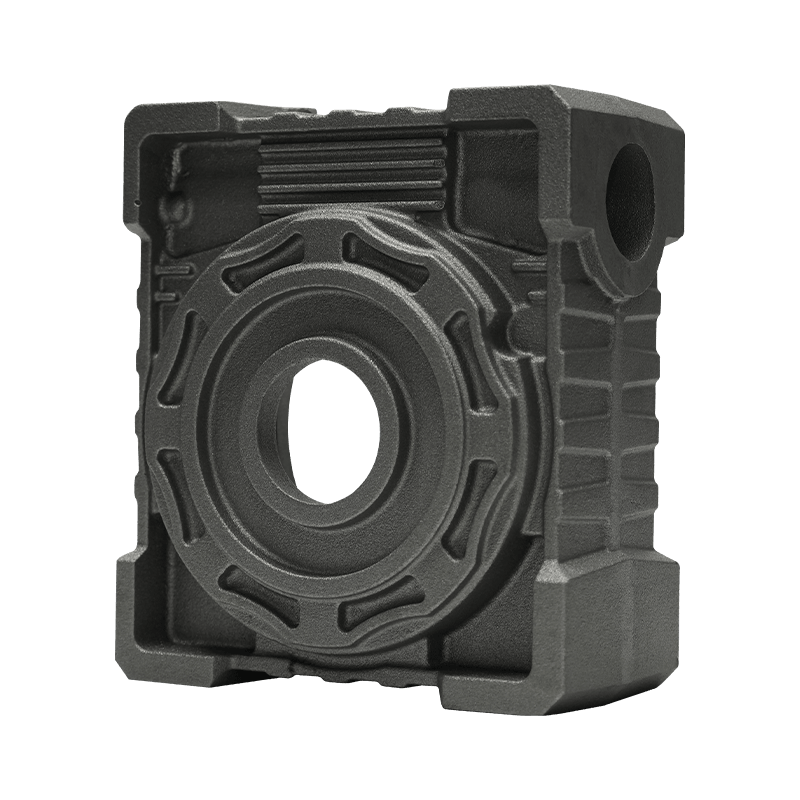
Grey Cast Iron Brake and Engine ComponentsGrey iron's flake graphite damps vibration and conducts heat, keeping it the standard for rotors, drums, and housings. This foundry supplies such castings where damping and cost outweigh tensile strength.View Product →
A practical rule for buyers: if fracture would strand a vehicle or create a safety liability, specify ductile iron; if the part mainly needs to conduct heat, absorb vibration, or resist sliding wear under compression, grey iron usually does the job at lower cost.
What Buyers Should Verify Before Awarding a Casting Contract
Conclusion first: process control at the foundry — not the quotation — determines whether ductile iron parts arrive sound. Because the material requires magnesium treatment and careful solidification management, quality risk concentrates in a handful of areas that are easy to audit:
- Nodularity and matrix: ask for metallographic reports per ASTM A247 showing at least 85 to 90 percent nodularity, plus a matrix check confirming the ferritic or pearlitic structure your drawing requires.
- Chemistry and test bars: every heat should ship with a spectrometer certificate and tensile results from test bars poured with that heat, not from an old data sheet.
- Defect control: shrinkage porosity in heavy sections and carbide chill in walls thinner than about 5 mm are the two classic ductile iron defects; safety parts justify X-ray, ultrasonic, or magnetic particle inspection.
- Heat treatment in-house: ferritizing anneals for elongation, normalizing or quench-and-temper for strength, and ADI processing all change final properties, so a foundry that outsources heat treatment adds lead time and traceability risk.
- Dimensional capability: sand castings typically hold ISO 8062 tolerances around CT11 to CT13 as cast, so machined mounting faces should be quoted at plus or minus 0.02 to 0.05 mm with CMM inspection reports.
- Traceability: heat numbers must remain readable from test bar through final packaging, ideally supported by PPAP-style documentation for OEM programs.
Commercially, the main risks are familiar ones. A quotation far below competitors often hides outsourced heat treatment or skipped inspection. Tooling for OEM patterns is a real upfront cost that should be quoted transparently rather than buried in piece price. And qualifying a second source later is expensive, so confirming process discipline now costs less than requalifying a supplier after a field failure.
Working With a Foundry That Casts Both Materials
Sourcing ductile and grey iron parts from one supplier simplifies tooling decisions, quality audits, and logistics. Yancheng Longwan Machinery Co., Ltd., founded in 2006 in Yancheng, Jiangsu Province, produces dedicated automotive component families in both ductile and grey cast iron and accepts ODM and OEM orders manufactured from customer drawings. The same ductile iron capability supports valve, pump, reducer, agricultural machinery, industrial robot, and semiconductor equipment customers, which is useful evidence that the supplier can hold tolerances across industries with very different quality expectations.
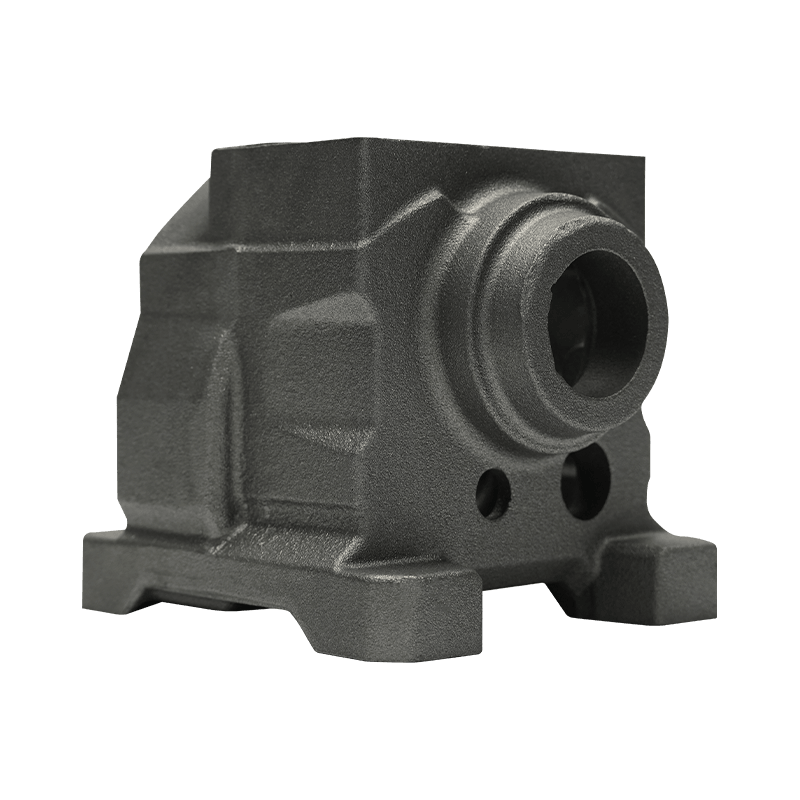
Ductile and Grey Iron Casting ManufacturerYancheng Longwan Machinery produces ductile and grey iron automotive parts from customer drawings with ODM and OEM support. Sourcing both grades from one audited supplier simplifies tooling, quality control, and logistics.View Product →The Bottom Line
Specify ductile cast iron wherever an automotive part faces cyclic loads, impact, or safety liability — calipers, knuckles, hubs, crankshafts, and differential carriers — and keep grey iron for rotors, drums, and damping-critical housings where it is genuinely the better material. Then choose a foundry on auditable process control: nodularity reports, per-heat test bars, in-house heat treatment, and honest tolerance quotes. Buyers who check those four things before the first purchase order rarely have to check for cracked castings afterward.