

 English
 русский
 Deutsch

Content
- 1 The short answer: three layers, not one list
- 2 The five metallurgical families
- 3 A practical comparison of the main families
- 4 What the 200, 300, and 400 series really mean
- 5 Reading a grade callout without overreading it
- 6 Why classification matters at the drawing stage
- 7 A simple way to specify a common stainless grade
Stainless steel looks simple on a purchase order and becomes detailed on the shop floor. One drawing says 304, another says 316L, and a third asks for “food-grade stainless.” Those labels are related, but they are not the same kind of classification. The practical way to understand how common grade stainless steels are classified is to separate three layers: metallurgical family, grade designation, and supplied condition. Once those layers are clear, a grade number stops being a magic code and becomes a set of expectations about corrosion resistance, strength, welding, forming, and cost.
The short answer: three layers, not one list
Most specification mistakes happen when people mix the layers. A family name describes the metallurgical structure. A grade number identifies an alloy within a standard system. A condition or finish describes how the product was processed and supplied.
- Family: austenitic, ferritic, martensitic, duplex, or precipitation hardening. This tells you the basic microstructure and the general balance of properties.
- Grade: a designation such as 304, 316L, 430, 410, 2205, or 17-4 PH. The grade should be read together with the standard that defines it.
- Condition: annealed, cold worked, quenched and tempered, aged, pickled, polished, or supplied in a particular product form. Two parts with the same grade can behave differently after different processing.
Keeping these layers separate lets a buyer compare a 304 sheet with a 316L sheet, a 410 shaft with a 17-4 PH shaft, or a cast component with a wrought one without assuming that the number alone tells the whole story.
The five metallurgical families
The most useful engineering classification is by microstructure. Each family has a different crystal structure and a different response to heat treatment, welding, and forming.
Austenitic stainless steels
This is the largest and most familiar family. Austenitic grades usually contain chromium and nickel, and they include most of the 200 and 300 series. They offer excellent ductility, weldability, and broad corrosion resistance. They are generally non-magnetic when annealed, although cold work can make them slightly magnetic. They are not hardened by heat treatment. Common examples include 304, 316L, 321, and 201.
Ferritic stainless steels
Ferritic grades have a body-centred cubic structure, are magnetic, and generally contain little or no nickel. The 400-series grades such as 430, 409, and 444 are typical. They offer useful corrosion resistance and good resistance to stress-corrosion cracking in some environments, but usually have lower toughness and formability than austenitic grades. They are not hardenable by heat treatment.
Martensitic stainless steels
Martensitic grades are magnetic and can be hardened by quenching and tempering. Grades such as 410, 420, and 440C are chosen for strength, wear resistance, and hardness rather than maximum corrosion resistance. Cutlery, shafts, and tooling are familiar applications.
Duplex stainless steels
Duplex grades have a mixed austenite-ferrite structure. Grades such as 2205 and 2507 combine high strength with good chloride resistance and stress-corrosion cracking resistance. They are magnetic and require more careful welding, but they can be efficient where thinner, stronger sections are useful.
Precipitation-hardening stainless steels
Precipitation-hardening grades gain strength through an aging treatment rather than simple quenching alone. 17-4 PH and 15-5 PH are common examples. They are chosen for high strength and reasonable corrosion resistance in applications such as aerospace parts, fasteners, and tooling.
A practical comparison of the main families
Because no family is best in every respect, a comparison is more useful than a ranking. The right choice depends on the service environment and the manufacturing route.
| Family | Typical common grades | Key traits | Common applications |
|---|---|---|---|
| Austenitic | 304, 316L, 321, 201 | High ductility, good weldability, broad corrosion resistance, generally non-magnetic when annealed | Food and dairy equipment, architectural panels, chemical service, fasteners |
| Ferritic | 430, 409, 444 | Magnetic, lower nickel content, moderate strength, good resistance to stress-corrosion cracking in some conditions | Appliance trim, exhaust systems, roofing, decorative panels |
| Martensitic | 410, 420, 440C | Hardenable by heat treatment, high strength and wear resistance, lower corrosion resistance than austenitic grades | Cutlery, shafts, molds, tooling, wear parts |
| Duplex | 2205, 2507 | High strength, good chloride resistance, magnetic, requires controlled welding | Offshore equipment, chemical processing, desalination, pulp and paper |
| Precipitation hardening | 17-4 PH, 15-5 PH | High strength through aging, good corrosion resistance, dimensional stability in some conditions | Aerospace components, fasteners, molds, high-strength shafts |
What the 200, 300, and 400 series really mean
The 200, 300, and 400 series labels come from historic AISI and SAE numbering. They are useful shorthand, but they are not a complete classification system on their own. The 200 series is austenitic and uses manganese and nitrogen to replace part of the nickel. The 300 series is austenitic with chromium and nickel, and it contains the most widely used grades, including 304 and 316. The 400 series covers ferritic and martensitic grades, such as 430 and 410.
Not every grade fits neatly into those series, and a number alone does not define the exact composition or condition. The Unified Numbering System, or UNS, gives more precise designations such as S30400, S31603, S32205, and S17400. European EN grades use names such as 1.4301, 1.4404, and 1.4462, while Japanese JIS grades use designations such as SUS304. For purchasing, the safest approach is to state the grade together with the standard, product form, and condition that the supplier must follow.
Reading a grade callout without overreading it
Take 316L as an example. The 316 identifies the alloy family and the general corrosion-resistance level. The L means low carbon, usually specified at 0.03% maximum, which improves weldability by reducing the risk of sensitization. It does not mean that every 316L product has the same finish, strength, or delivery condition.
- L: low carbon, often chosen for welded assemblies.
- H: higher carbon, sometimes used where elevated temperature strength is needed.
- N: nitrogen addition, often used to increase strength in austenitic or duplex grades.
- Ti or Nb: stabilising elements that can reduce sensitization in some high-temperature or welded service conditions.
A grade suffix is only one part of the specification. A 316L sheet in a 2B finish is not the same product as a 316L casting, forging, or machined bar. The manufacturing route, heat treatment, surface finish, and inspection requirements all belong in the purchase description.
Why classification matters at the drawing stage
Classification is useful only when it guides decisions. Corrosion environment, operating temperature, magnetic response, fabrication method, cleaning regime, and cost all matter. A grade that performs well in a dry indoor assembly may fail quickly near chlorides or in a welded, stagnant-water joint. A grade that machines easily may be difficult to weld, and a grade that offers high strength may give up some corrosion resistance.
On our own shop floor, we work mainly with ductile and grey cast iron rather than stainless steel, so we treat cross-family substitutions with care. A 304 bracket and a ductile iron bracket can both be strong, but they respond differently to impact, chloride exposure, and welding. If your design has moved from stainless to cast iron, our guide to ductile iron versus cast iron is a sensible starting point. If the drawing actually calls for a cast iron valve body rather than a stainless one, our ductile cast iron valve accessory line is the relevant place to look.
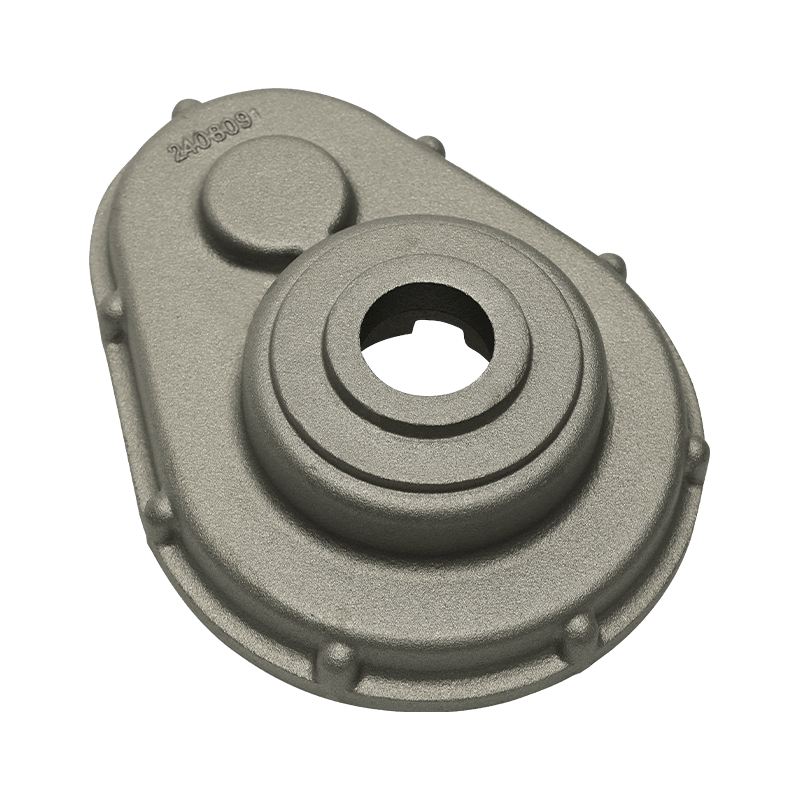 Custom Ductile Cast Iron Valve AccessoriesCustom ductile iron valve bodies, bonnets, housings and brackets made to drawings or samples, with machining and coating options for water, wastewater and process valve assemblies.View Product →
A simple way to specify a common stainless grade
When writing or reviewing a specification, describe the classification in a way that a supplier can verify:
- Name the family and standard grade, for example austenitic 316L or UNS S31603.
- State the governing standard and product form, such as sheet to EN 10088-2 or a forging to ASTM A182.
- State the condition and finish, such as solution annealed, pickled, polished, cold worked, or quenched and tempered.
- Add any critical service requirement, such as chloride exposure, temperature range, magnetic limit, weld procedure, or inspection method.
That approach is far more reliable than “stainless steel” or “food grade” alone. It also makes it easier to compare quotations fairly, because every supplier is responding to the same classification. If you are translating a drawing into a cast component, send the drawing and service conditions; we will tell you plainly whether cast iron is suitable or whether stainless remains the better choice.