

 English
 русский
 Deutsch

Content
If you have ever looked at a material specification and asked, "cast iron has about how much carbon content?" you are not alone. It is one of those questions that seems simple but opens the door to the entire world of iron casting. The common answer is that cast iron typically contains 2% to 4% carbon by weight. But before you settle on that number, it helps to understand why carbon matters and how it changes from one cast iron grade to another. As a foundry that works with grey and ductile iron every day, we hope to give you a practical, field-tested view of carbon in cast iron.
The Short Answer: Cast Iron Contains About 2% to 4% Carbon
Cast iron is an iron-carbon alloy with more than 2% carbon. Most commercial cast irons contain about 2% to 4% carbon, with the exact value depending on the grade and the casting process. Steels, by comparison, usually contain less than 2% carbon. That single difference accounts for many of the performance gaps between steel and cast iron: cast iron has a lower melting point, better fluidity in the mold, and excellent resistance to wear when the carbon is present in the right form. However, higher carbon also makes the material more brittle if it is not properly alloyed or treated.
- More than 4% carbon: typically pig iron, used as a raw material for steelmaking or remelting.
- 2% to 4% carbon: the usual cast iron range, covering grey, ductile, white, and malleable irons.
- Less than 2% carbon: steel, which has very different mechanical properties.
It is important to say "about" rather than quoting one precise number. Cast iron is a family of alloys, not a single material. Grey iron, ductile iron, white iron, and malleable iron all have slightly different carbon levels. Even within a single foundry, the target carbon content may shift by a few tenths of a percent to achieve the required microstructure and mechanical properties.
How Carbon Content Varies Among Cast Iron Types
When someone asks how much carbon cast iron has, a useful next step is to look at the main cast iron families. Grey and ductile iron are the two types we produce most often, but the table below gives a broader comparison.
| Cast Iron Type | Typical Carbon Content (%) | Main Characteristics |
|---|---|---|
| Grey cast iron | 2.5 - 4.0 | Graphite flakes, good machinability, excellent damping |
| Ductile cast iron | 3.0 - 4.0 | Spheroidal graphite, higher strength and toughness |
| White cast iron | 2.0 - 3.6 | Hard and wear-resistant, low ductility |
| Malleable cast iron | 2.0 - 2.6 | Heat-treated, more ductile than grey iron |
Grey cast iron, for instance, usually has a carbon content between 2.5% and 4%. The carbon exists as graphite flakes, which give grey iron its characteristic grey fracture surface. These flakes also give the material excellent vibration damping and allow it to be machined fairly easily. That is why grey iron is still widely used for machine bases, valve bodies, pump housings, and many other components that benefit from stability.
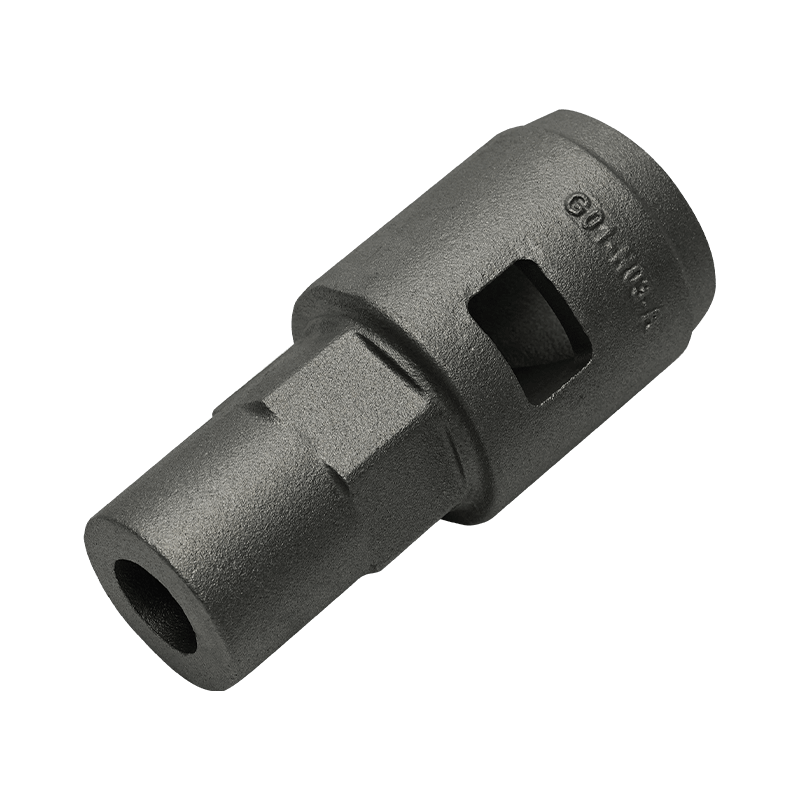
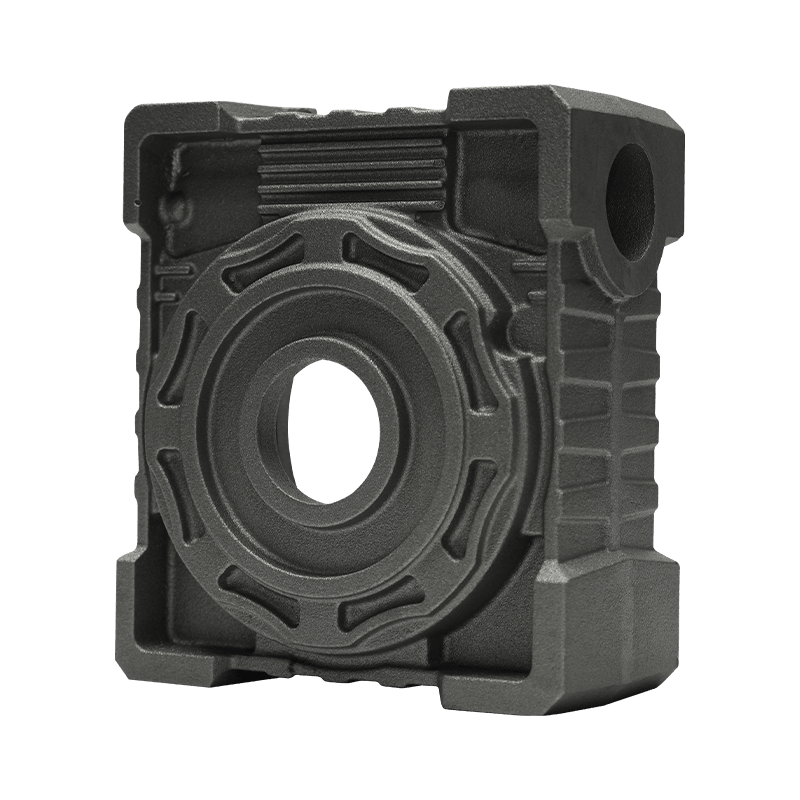
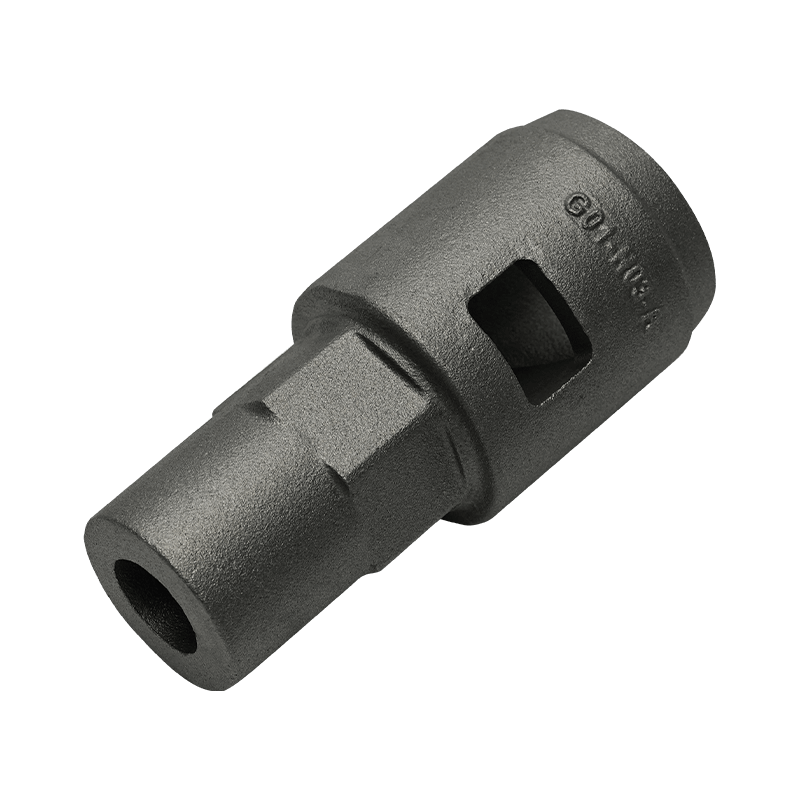 Grey Cast Iron Castings for Diverse Industrial ApplicationsExplore our grey iron castings, ideal for machine bases and housings due to excellent damping and machinability. Custom parts with robust quality control.View Product →
Ductile cast iron, also known as nodular iron, typically contains about 3% to 4% carbon. A small addition of magnesium or cerium causes the graphite to form spheroidal nodules instead of flakes. This changes the mechanical behavior dramatically: ductile iron is stronger, tougher, and less likely to crack under shock loads than grey iron. It has become the preferred material for automotive parts, agricultural machinery components, and pipe fittings that need to survive pressure and impact.
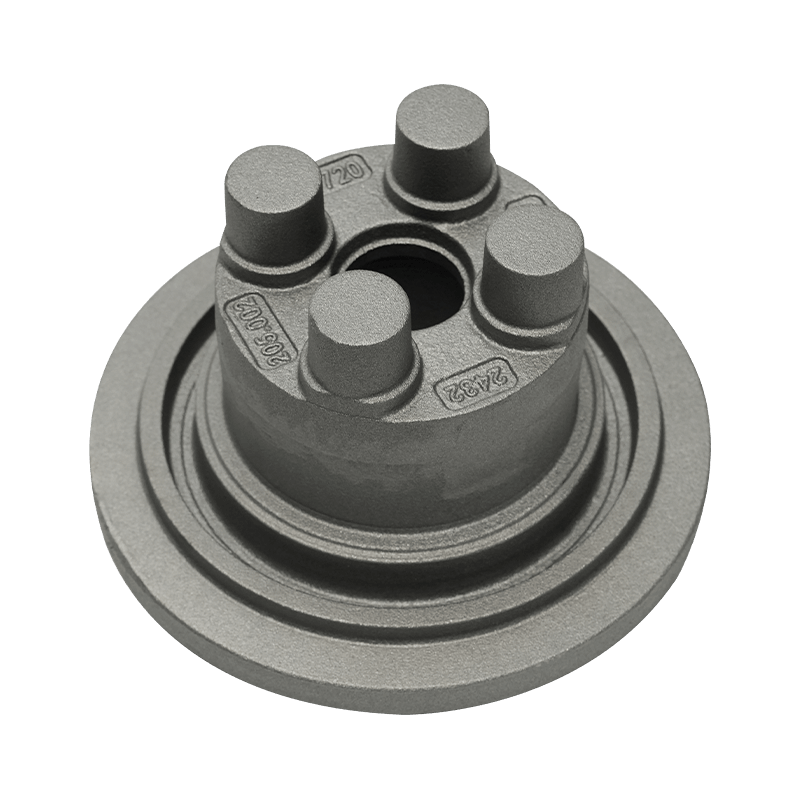
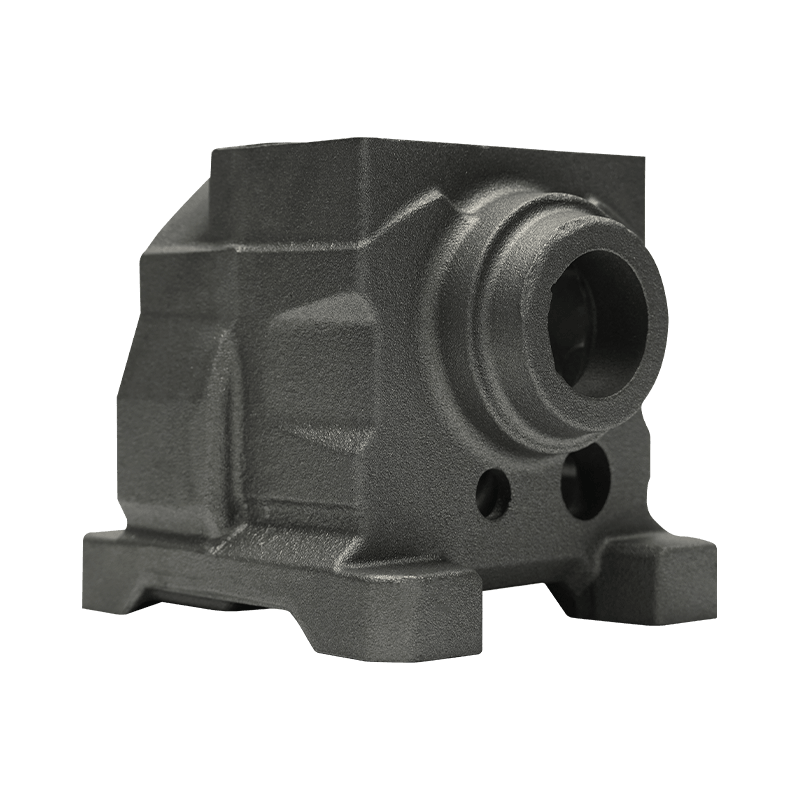
Ductile Iron Castings for High-Stress ComponentsDiscover ductile iron solutions for automotive, agricultural, and valve parts, offering superior strength and toughness compared to grey iron.View Product →
White cast iron and malleable iron occupy more specialised corners of the cast iron family. White iron has a carbon content of about 2% to 3.6% and forms hard iron carbide instead of graphite, making it extremely wear-resistant. Malleable iron, with roughly 2% to 2.6% carbon, is heat treated to convert carbon into irregular graphite nodules, offering a balance between castability and ductility. These types are less common in everyday component supply, but they prove the point that carbon content is never a fixed number across all cast irons.
Why Carbon Content Matters in Real Components
Carbon content is not just a number on a datasheet; it drives the behavior of the metal during casting and in service. Higher carbon content lowers the liquidus temperature, which means the molten iron flows more easily into thin and complex mould sections. This is one reason cast iron can produce intricate parts with less difficulty than steel. But extra carbon also increases the tendency to form graphite, so the final properties depend heavily on cooling rate and alloying.
For grey iron, the graphite flakes interrupt the metal matrix. This reduces tensile strength but improves machinability and damping. For ductile iron, the spheroidal graphite structure gives the metal a combination of strength and ductility that can rival cast steel in many applications. The practical result is that a foundry must control carbon content carefully to meet the customer's specification. Too little carbon can cause shrinkage or poor fluidity; too much can create unwanted graphite or carbide structures.
In our work at the foundry, we often see how these differences play out in products such as valve bodies, pump casings, automotive brackets, and agricultural machinery parts. Each component has its own carbon requirement because each one carries a different load and must be manufactured with a different method. We explain more of the technical detail in our article on the difference between grey and ductile iron.
Ductile iron pipe fittings are a good example of carbon doing useful work. The spheroidal graphite structure allows the fittings to absorb pressure surges and handle the stresses of underground installation. That is why they are a common choice for water mains, fire-fighting lines, and industrial piping.
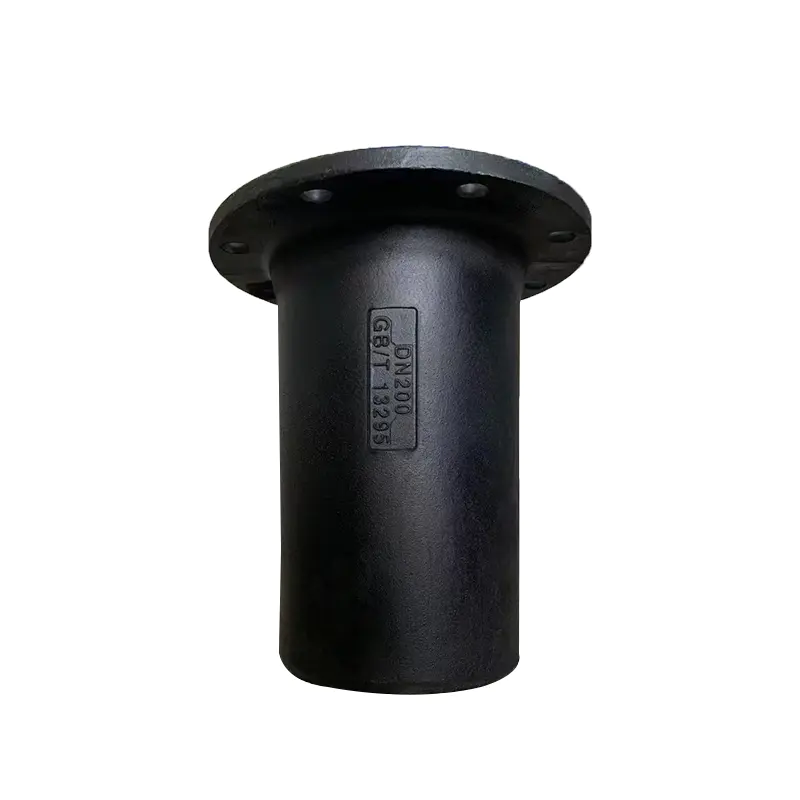 Ductile Iron Pipe Fittings for Pressurized SystemsHigh-strength, corrosion-resistant pipe fittings for water and fire-fighting lines, with precise carbon control ensuring reliable pressure handling.View Product →
Controlling Carbon Content in a Real Foundry
In a production foundry, carbon content is not a theoretical value left to chance. We control it through careful charge calculation, melt monitoring, and, when necessary, adjustments with carbon raiser or steel scrap. The carbon equivalent value is often used as a process control tool because it combines carbon and silicon into a single number that predicts how the iron will behave during solidification.
For grey iron, a typical carbon equivalent target might be around 3.5% to 4.2%, depending on section size and desired strength. For ductile iron, the carbon equivalent is also important because it affects nodule count, shrinkage tendency, and mechanical properties. Many customers ask us for a specific ASTM, ISO, or DIN grade, and that grade usually defines a carbon range as well as tensile and hardness requirements.
Because we produce castings for automotive, agricultural machinery, water pumps, valves, and even semiconductor equipment, we need to adapt our carbon control to each application. A thin-walled housing may need a slightly different carbon level than a massive valve body. That experience is something we bring to every project, whether it is a standard part or a custom design under our ODM/OEM service.
So, How Much Carbon Content Does Cast Iron Have?
If you need a simple answer, cast iron has about 2% to 4% carbon by weight. If you need a more precise answer, ask which type of cast iron. Grey iron commonly contains 2.5% to 4% carbon, ductile iron often sits at 3% to 4%, white iron generally has 2% to 3.6%, and malleable iron usually stays around 2% to 2.6%. The carbon content is one of the first things a foundry engineer looks at because it shapes the material's structure and performance.
For buyers and engineers, the practical takeaway is simple: carbon content matters, but it is not the only factor. The right grade, the right microstructure, and the right casting process are just as important. If you are evaluating a supplier, ask how they control carbon during melting and how they verify the final chemistry. At Yancheng Longwan Machinery, we are happy to talk about these details, because a well-controlled melt is the foundation of every reliable casting.